



Artificial intelligence is changing the way people work, communicate, research information, and manage everyday digital activities. From analysing large datasets to creating content and automating repetitive tasks, AI-powered tools are becoming increasingly important across different industries. These technologies are helping individuals and businesses approach complex activities with greater speed and organisation.
The growing interest in the Abraham Quiros Villalba AI tool reflects curiosity about the relationship between emerging technology, investment research, and artificial intelligence. People searching for this topic want to understand who Abraham Quiros Villalba is, what the associated AI project aims to accomplish, and how similar technologies can support modern digital work.
However, understanding an AI project requires looking beyond its name or online descriptions. It is important to distinguish between proposed features, available technology, and independently verified capabilities.
This article explores the reported connection between Abraham Quiros Villalba and AI tools, explains how artificial intelligence is transforming digital workflows, and examines the benefits and limitations users should understand.
What Is the Abraham Quiros Villalba AI Tool?
The term Abraham Quiros Villalba AI tool is associated with an artificial intelligence project described as focusing on investment research and financial market analysis.
According to its associated website, the project’s objectives include using AI technology to examine financial information, identify market patterns, and organise insights that may help users understand different investment-related developments.
The concept reflects a broader movement towards using artificial intelligence to make complicated information easier to analyse. Financial markets generate enormous amounts of data, and reviewing everything manually can be time-consuming. AI-powered analytical systems can potentially help organise this information and identify relationships between different indicators.
Some of the areas mentioned in the project’s description include historical market data, current prices, public sentiment, cryptocurrency activity, and emerging business opportunities.
However, there is an important distinction between a project’s stated objectives and its demonstrated capabilities. Detailed technical documentation and independently verified performance information remain limited. Therefore, readers should treat these features as described objectives rather than confirmed capabilities of a fully established product.
Who Is Abraham Quiros Villalba?
Abraham Quiros Villalba is the individual associated with the AI investment research project discussed in online searches.
His associated website presents interests in technology, investment, cryptocurrency, and renewable energy. The website also describes an interest in developing AI-powered solutions that can make financial research more accessible.
When researching individuals connected with emerging technology, it is important to evaluate information carefully. Personal websites and third-party articles can provide background information, but their claims should not automatically be treated as independently verified professional credentials.
For readers interested in the Abraham Quiros Villalba AI tool, understanding the available project information is more useful than making assumptions about its development history or technical achievements.
This distinction helps create a clearer picture of what is publicly known and what still requires independent confirmation.
How Artificial Intelligence Is Changing Digital Work
Artificial intelligence is influencing digital work by helping people collect, process, organise, and understand information more efficiently.
Traditional workflows often involve repetitive activities such as reviewing documents, comparing information, preparing reports, and organising data. AI-powered applications can assist with many of these processes, allowing professionals to spend more time on tasks that require experience and critical thinking.

For example, content creators can use AI writing assistants to organise ideas, researchers can summarise lengthy documents, and businesses can analyse customer feedback to identify common concerns.
The following table explains how artificial intelligence is being applied across different areas of digital work.
| Area | Application of AI | Practical benefit |
|---|---|---|
| Research | Organising and summarising information | Saves research time |
| Content creation | Drafting and editing assistance | Improves workflow efficiency |
| Data analysis | Identifying patterns in datasets | Supports better understanding |
| Customer service | Responding to common enquiries | Improves response management |
| Business operations | Automating repetitive activities | Reduces manual work |
| Financial research | Analysing market information | Supports informed evaluation |
These examples demonstrate that AI is not limited to one profession or industry. Its applications continue to expand as businesses discover new ways to integrate intelligent software into their operations.
Potential AI Capabilities Associated With the Project
The Abraham Quiros Villalba AI project is described in connection with financial research and market analysis. Understanding these areas also helps explain how similar AI-powered systems can be useful.
1. Historical Market Data Analysis
Historical market analysis involves examining information from previous periods to understand price movements, trends, and relationships between financial events.
AI systems can process large datasets and identify patterns that might be difficult to recognise through manual research alone. For example, an analytical model could compare historical asset prices with economic indicators to help researchers understand previous market behaviour.
However, historical information cannot guarantee future performance. Market conditions change, and patterns identified by AI may not remain relevant.
2. Real-Time Market Information
Financial markets produce information continuously. Monitoring price movements, company announcements, economic developments, and other updates can require considerable effort.
AI-powered platforms can potentially collect information from different sources and organise it into understandable reports. This allows researchers to follow relevant developments without manually reviewing every available source.
The usefulness of this process depends on data accuracy, source reliability, and how frequently the information is updated.
3. Market Sentiment Analysis
Market sentiment describes how people feel or think about a particular company, financial asset, or economic development.
AI technologies can use natural language processing to examine written information, including news reports, public discussions, and online commentary. These systems can identify positive, negative, or neutral opinions and organise the results for further analysis.
For instance, an increase in negative discussions about a company could encourage researchers to investigate the reasons behind changing public attitudes.
However, online opinions do not always reflect actual market behaviour. Sentiment analysis should be treated as supporting information rather than a reliable prediction.
4. Cryptocurrency Research
Cryptocurrency markets generate large amounts of information through blockchain transactions, trading activity, project announcements, and public discussions.
AI-powered analytical systems can potentially help researchers organise this information and examine changes in market activity.
Such analysis may be useful for understanding market developments, but cryptocurrency prices remain unpredictable. AI cannot remove the risks associated with sudden price changes or uncertain market conditions.
5. Emerging Business Research
Artificial intelligence can also support research into new companies, industries, and business opportunities.
By examining company information, industry reports, funding announcements, and market developments, AI systems can help researchers identify organisations and trends that deserve further investigation.
This can make early-stage business research more organised. Nevertheless, identifying a promising industry or company does not guarantee its future success.
How an AI-Powered Research System Works
Although the complete technical architecture of the Abraham Quiros Villalba project has not been independently documented, most AI-powered research systems follow a similar general process.
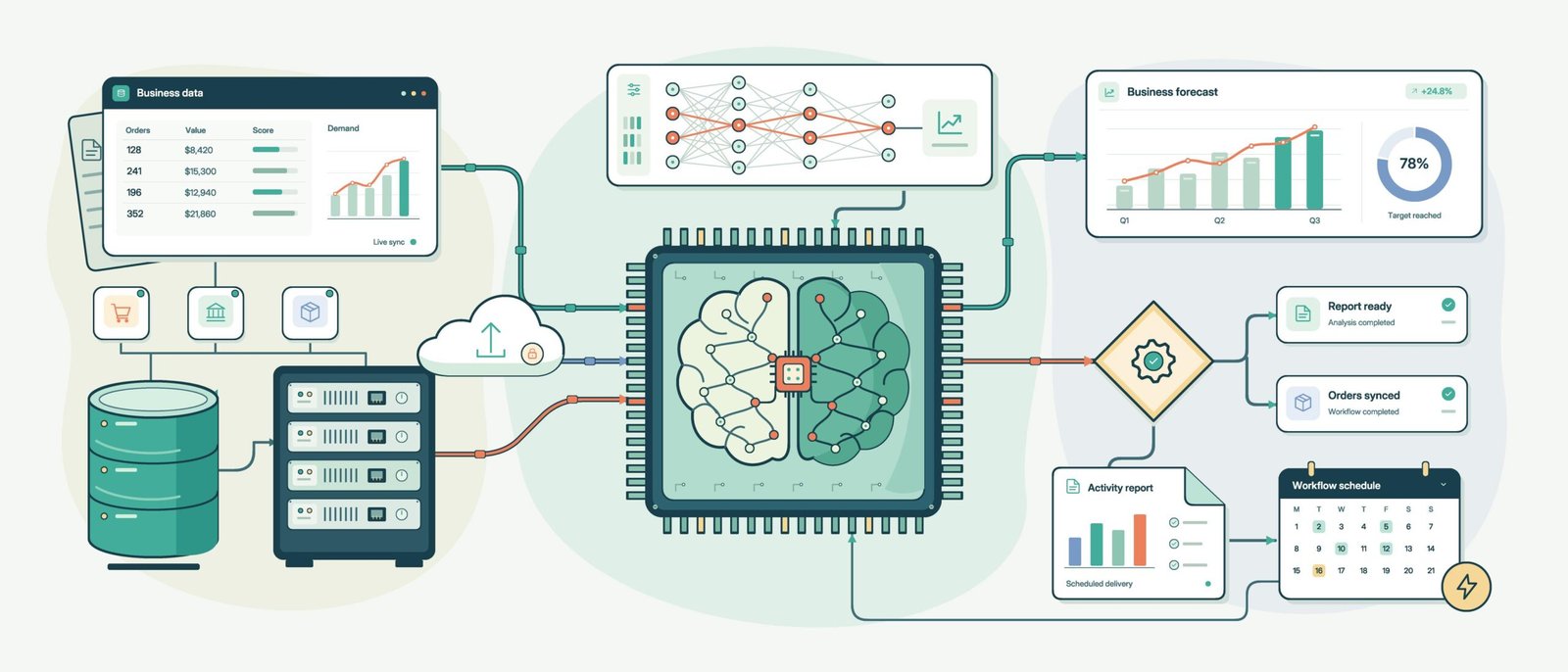
The system first collects relevant information from available sources. It then prepares the data for analysis before applying algorithms to identify patterns, relationships, or useful insights.
| Processing stage | Description | Purpose |
|---|---|---|
| Data collection | Gathers information from relevant sources | Provides research material |
| Data preparation | Cleans and organises information | Improves data consistency |
| AI processing | Examines patterns and relationships | Identifies useful insights |
| Result generation | Produces summaries or analytical outputs | Makes information understandable |
| Human evaluation | Reviews the generated results | Supports responsible decisions |
This process provides a general explanation of how AI research software can function. It should not be interpreted as confirmation that the Abraham Quiros Villalba project uses every stage in precisely this way.
Benefits of AI Tools in Modern Digital Work
AI tools can offer several practical advantages when used for appropriate tasks. Their main value often comes from reducing repetitive work and making information easier to manage.
| Benefit | How it helps |
|---|---|
| Time efficiency | Automates selected repetitive activities |
| Faster research | Processes large amounts of information |
| Better organisation | Structures information into understandable formats |
| Pattern recognition | Helps identify relationships within datasets |
| Improved productivity | Allows professionals to focus on important responsibilities |
| Research assistance | Provides additional information for evaluation |
For businesses, these advantages can improve operational efficiency. For individuals, AI tools can make research, communication, and information management more convenient.
However, the quality of results depends on the software, available information, and the way users apply the technology.
Limitations and Risks of AI-Powered Tools
Despite their capabilities, AI systems have limitations. They can produce inaccurate information, misunderstand complex situations, or generate results that appear convincing without being correct.
These issues are particularly important when AI is used for financial research because incorrect information may influence important decisions.
| Limitation | Potential issue | Recommended approach |
|---|---|---|
| Inaccurate information | Incorrect data affects results | Verify original sources |
| Algorithmic bias | Results may be incomplete or unfair | Examine the methodology |
| Limited context | AI misunderstands complex situations | Apply human judgement |
| Privacy concerns | Sensitive information may be exposed | Review privacy policies |
| Uncertain predictions | Future outcomes cannot be guaranteed | Avoid relying on predictions alone |
| Technical errors | Outputs may become inconsistent | Review results regularly |
Users should also avoid depending entirely on automated recommendations. Artificial intelligence can support research, but it cannot replace professional knowledge, independent evaluation, or responsible decision-making.
What Should Users Check Before Trusting an AI Tool?
Before using any emerging AI platform, readers should examine whether the service is legitimate, transparent, and suitable for their requirements.
This is particularly important for platforms associated with investment research, where misleading information can have financial consequences.
The following factors can help users evaluate an AI-powered service.
| Evaluation factor | What users should examine |
|---|---|
| Official website | Whether the website clearly represents the actual project |
| Developer information | Whether responsible individuals or organisations are identifiable |
| Product demonstration | Whether advertised functions can be demonstrated |
| Technical documentation | Whether the technology and its limitations are explained |
| Pricing | Whether subscription costs are transparent |
| Privacy policy | How personal and financial information is handled |
| Independent reviews | Whether credible third-party assessments exist |
| Performance evidence | Whether claims are supported by reproducible results |
For the Abraham Quiros Villalba AI tool, readers should carefully distinguish between its published objectives and independently demonstrated performance.
Checking these details before sharing personal information or relying on an AI-generated analysis is a sensible approach.
The Future of Artificial Intelligence in Digital Work
Artificial intelligence is expected to become more integrated into professional environments as businesses continue adopting automation and intelligent software.
Future applications may offer more advanced research capabilities, improve information management, and help professionals complete complicated activities with greater efficiency.
In financial research, AI could assist analysts with examining larger datasets and comparing different market indicators. In other industries, similar technology may support education, healthcare administration, customer communication, and business planning.
However, technological development also brings responsibilities. Developers must consider data security, transparency, accuracy, and the consequences of automated decisions.
The most useful AI tools will not necessarily be those with the greatest number of features. Their value will depend on whether they solve genuine problems and provide dependable assistance.
Frequently Asked Questions
1. What is the Abraham Quiros Villalba AI tool?
It refers to a developing AI-powered investment research project associated with Abraham Quiros Villalba. Its published description focuses on analysing financial information, market trends, and sentiment.
2. How does the Abraham Quiros Villalba AI tool use artificial intelligence?
The project describes potential applications involving historical market data, current prices, sentiment analysis, and emerging business opportunities. Its complete technical capabilities have not been independently verified.
3. Is the Abraham Quiros Villalba AI tool available to everyone?
The associated website has described the project as being in beta development and offered an early-access request. Its general availability and complete product details have not been independently established.
4. Can AI tools improve digital productivity?
Yes. AI tools can automate repetitive tasks, summarise information, organise documents, and assist with data analysis. Their effectiveness depends on the quality of the software and how it is used.
5. Can artificial intelligence predict financial markets?
AI can analyse historical information and identify statistical patterns, but it cannot guarantee future market movements. Unexpected events and changing economic conditions can affect its results.
6. What should users check before using an AI platform?
Users should examine its official website, ownership, technical documentation, privacy policy, pricing, and independent performance evidence before trusting the service.
Conclusion
Artificial intelligence is transforming digital work by making research, information processing, automation, and data analysis more accessible. These technologies are helping individuals and organisations manage complex activities while improving the efficiency of everyday workflows.
The Abraham Quiros Villalba AI tool represents an emerging project associated with AI-powered investment research and market analysis. Its published objectives reflect the growing interest in applying artificial intelligence to financial information, although its complete capabilities and performance require further independent verification.
For readers, the most important step is to approach emerging AI projects with curiosity and critical thinking. Understanding what a platform claims to offer, checking available evidence, and recognising the limitations of artificial intelligence can help users make more informed decisions.
Ultimately, the future of digital work will depend not only on smarter technology but also on how responsibly people use it.