

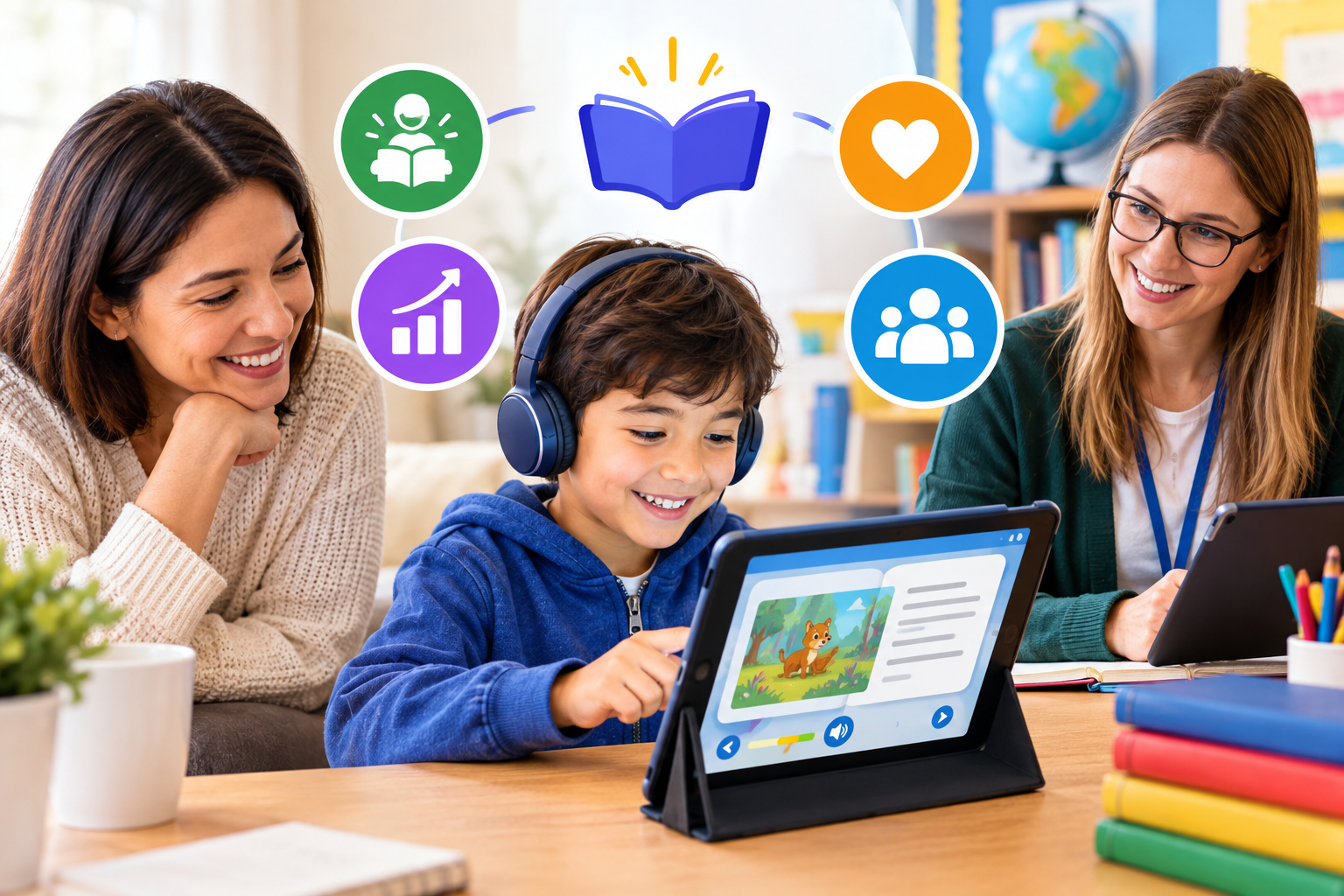

Reading practice is most effective when children have regular opportunities to read, understand what they are reading, and gradually build confidence. For many parents and teachers, finding resources that keep children interested while supporting different reading abilities can be challenging. This is one reason digital reading platforms such as Raz-Kids have become part of reading practice routines in many learning environments.
Raz-Kids is designed to provide children with access to digital books and reading activities through a structured online environment. Rather than relying on a single textbook or one reading level for every child, the platform is commonly used to provide reading materials that can be matched more closely to a learner’s current ability.
However, technology alone does not make a child a better reader. The value of a digital reading platform depends on how it is introduced, how consistently children use it, and how parents and educators support the reading process.
What Is Raz-Kids?
Raz-Kids is an online reading resource from Learning A-Z that provides students with access to digital books and related reading activities. The platform is primarily designed for children developing early reading and comprehension skills.
One of its notable features is its use of leveled reading materials. Children can work with books that correspond to different stages of reading development, allowing practice to become more structured rather than completely random.
Depending on the setup used by a school or classroom, students may read books digitally, listen to audio support, complete comprehension activities, and work through assigned reading tasks.
The exact experience can vary depending on the educational plan, teacher settings, and access provided to the student.
Why Reading Practice Needs to Be Consistent
Children generally do not become confident readers by practicing only occasionally. Regular exposure to appropriately challenging texts can help them develop familiarity with vocabulary, sentence structures, comprehension strategies, and reading patterns.
For younger learners, repetition is especially important. Reading the same book more than once can help a child move from slowly decoding words toward reading with greater accuracy and fluency.
This is where structured digital resources can be useful. They can make reading materials readily available and give children another opportunity to practice outside of a traditional classroom lesson.
That does not mean every child needs a digital platform. Print books, library reading, teacher-guided instruction, family reading time, and discussion are all important parts of literacy development.
Why Teachers Use Raz-Kids
Teachers often work with students who have different reading abilities within the same classroom. Giving every student exactly the same material can make reading practice either too easy or too difficult for some learners.
A leveled digital reading resource can help teachers organize reading practice around individual student needs.
1. Reading Materials Can Be Matched to Student Ability
One of the practical reasons educators use Raz-Kids is the availability of reading materials organized by levels.
A child who is developing foundational reading skills can work with simpler texts, while a more advanced reader can practice with increasingly complex material.
This type of differentiation can make independent reading time more productive because students are not necessarily expected to work at the same level.
Teachers can also use reading performance and classroom observation to decide when a student may be ready for more challenging material.
2. It Supports Independent Practice
Classroom time is limited. A teacher may introduce a reading strategy, model a skill, and work with a small group, but students also need opportunities to practice independently.
A platform such as Raz-Kids can provide an additional space for that practice.
Students can access assigned books and activities without requiring the teacher to sit beside each learner throughout the entire session.
Independent practice does not replace teacher instruction, but it can extend the amount of time students spend interacting with text.
3. Teachers Can Track Student Activity
Digital learning platforms can provide educators with information about student activity and progress. This can be useful when combined with classroom observations, reading assessments, and other evidence of learning.
Progress information may help a teacher identify areas that need further attention.
For example, a student who completes reading activities but continues to struggle with comprehension may need more direct instruction, discussion, or targeted practice rather than simply being assigned additional books.
The data is most useful when it informs teaching decisions instead of being treated as the only measure of reading ability.
Why Parents Use Raz-Kids at Home
Parents often want practical ways to support reading outside school hours. A digital reading resource can make it easier to establish a predictable reading routine, particularly when children already enjoy using technology.
1. It Makes Books Easily Accessible
One advantage of a digital library is convenience. A child can access assigned or available reading materials without needing to locate a physical book.
This can be particularly useful for families managing busy schedules or trying to build a regular reading routine at home.
Still, convenience should not replace real-world reading experiences. Visiting a library, reading printed books, looking at picture books, and discussing stories together remain valuable activities.
2. Children Can Practice More Frequently
Parents can use reading platforms as part of short, consistent sessions rather than treating reading practice as a once-a-week activity.
For example, a family might establish a routine in which a child reads for a set amount of time after school or before bedtime.
The goal does not need to be completing a large number of books. A better focus is meaningful reading, understanding the text, and developing confidence.
3. Audio Support Can Help Some Learners
Digital reading platforms may include audio features that allow children to hear a text read aloud.
Audio can be useful as a support tool, particularly when a child encounters unfamiliar words or is still developing fluency.
However, parents should be careful not to let listening replace reading altogether when the objective is independent reading development.
A useful routine may involve listening to difficult sections first and then encouraging the child to read the text independently.
How Raz-Kids Can Support Different Reading Skills
Reading is not one single skill. Children need to develop several related abilities over time.
Phonics and Word Recognition
Beginning readers need opportunities to connect letters and sounds, recognize common patterns, and develop increasingly automatic word recognition.
Books at appropriate early reading levels can give children opportunities to apply these skills in meaningful contexts.
Fluency
Fluency involves reading accurately, at an appropriate pace, and with natural phrasing.
Repeated reading can support fluency because children become more familiar with vocabulary and sentence structures.
Parents and teachers can encourage children to reread familiar books aloud rather than always moving immediately to a new title.
Vocabulary
Exposure to a wide range of texts introduces children to words they may not hear in everyday conversation.
When a child encounters an unfamiliar word, adults can pause and discuss its meaning, pronunciation, and use in the sentence.
This transforms reading from a simple decoding exercise into a language-learning experience.
Comprehension
Comprehension is one of the most important parts of reading.
A child may be able to pronounce every word correctly and still struggle to understand the story.
Parents and educators can ask questions such as:
-
What happened in the story?
-
Why did the character make that choice?
-
What do you think might happen next?
-
What was the main idea?
-
Which part was most important?
These conversations can help children think beyond individual words and focus on meaning.
Raz-Kids Should Complement, Not Replace, Adult Guidance
One of the most important points for parents and educators is that digital reading tools work best as part of a broader literacy strategy.
A child may complete books and quizzes successfully while still needing help with vocabulary, inference, pronunciation, or deeper comprehension.
Adult interaction remains important.
Teachers can provide direct instruction, model reading strategies, assess difficulties, and adjust instruction. Parents can ask questions, listen to children read, introduce new vocabulary, and encourage reading beyond assigned activities.
The strongest reading routines usually combine independent practice with human interaction.
Tips for Parents Using Raz-Kids at Home
Parents can make digital reading more productive by creating a simple routine.
Start with an appropriate reading level rather than automatically selecting the most advanced book available. The goal is to give the child enough challenge to learn without making every reading session frustrating.
Encourage your child to read aloud regularly. Listening to them can reveal difficulties that may not be obvious when they are reading silently.
Talk about the book after reading. A few thoughtful questions can often be more valuable than simply asking whether the child finished.
Keep sessions manageable. Younger children may benefit from shorter, consistent practice instead of long sessions that become tiring.
Finally, balance screen-based reading with physical books and other literacy activities.
Tips for Teachers Using Raz-Kids Effectively
Teachers can get more value from digital reading platforms when they connect them directly to classroom instruction.
Use student activity information alongside teacher observations and formal or informal assessments.
Group students according to specific instructional needs rather than assuming that all children at the same digital level require identical support.
Encourage students to explain what they have read, not simply complete activities.
Use digital books as a starting point for vocabulary, comprehension, phonics, writing, and discussion activities in the classroom.
Most importantly, remember that reading development is individual. A student’s progress may not always appear as a straight line, and changes in engagement, confidence, attendance, instruction, and outside practice can all affect performance.
Is Raz-Kids Suitable for Every Child?
No single reading resource is ideal for every learner.
Some children may enjoy digital reading and become more motivated by interactive features. Others may concentrate better with printed books.
Children with specific learning needs may also require additional instruction or specialized support beyond what a general digital reading platform provides.
Parents and teachers should consider the child’s age, reading ability, learning preferences, instructional goals, and access to adult support.
The right question is not simply whether a platform is popular, but whether it is helping a particular child make meaningful progress.
What Makes a Good Reading Routine?
Whether a child uses Raz-Kids, printed books, a school library, or several resources, a strong reading routine typically includes a few key elements:
Appropriate challenge: Books should be challenging enough to promote learning without making reading consistently frustrating.
Regular practice: Frequent reading provides more opportunities to develop fluency, vocabulary, and comprehension.
Active engagement: Children should think about what they read, not simply move through pages.
Discussion: Talking about stories helps children develop comprehension and language skills.
Progress monitoring: Adults should pay attention to what the child can do independently and where support is needed.
Variety: Fiction, nonfiction, informational texts, poetry, and other formats can expose children to different vocabulary and structures.
Final Thoughts
Raz-Kids is used by many parents and educators because it offers a convenient way to provide children with structured digital reading practice. Features such as leveled books, online access, audio support, and reading activities can make it easier to create additional opportunities for reading.
At the same time, a digital platform should be viewed as one part of literacy instruction rather than a complete replacement for teachers, parents, physical books, or meaningful conversation.
Children become stronger readers through repeated practice, appropriate instruction, active comprehension, and encouragement. When Raz-Kids is used thoughtfully alongside these elements, it can serve as a practical addition to a broader reading routine.
Frequently Asked Questions
What age group is Raz-Kids designed for?
Raz-Kids is primarily designed for young learners developing foundational and early reading skills. The appropriate level depends on the individual child’s reading ability rather than age alone.
Can parents use Raz-Kids at home?
Yes. Depending on how access is provided, families can use the platform as part of an at-home reading routine.
Does Raz-Kids replace physical books?
No. Digital reading can complement physical books, library reading, and other literacy activities.
How often should a child use Raz-Kids?
There is no single schedule that fits every learner. Consistent, manageable reading practice is generally more useful than occasional long sessions.
Is Raz-Kids enough to improve reading?
A digital platform alone is unlikely to address every aspect of reading development. Teacher instruction, adult guidance, discussion, vocabulary development, and broader reading experiences remain important.