

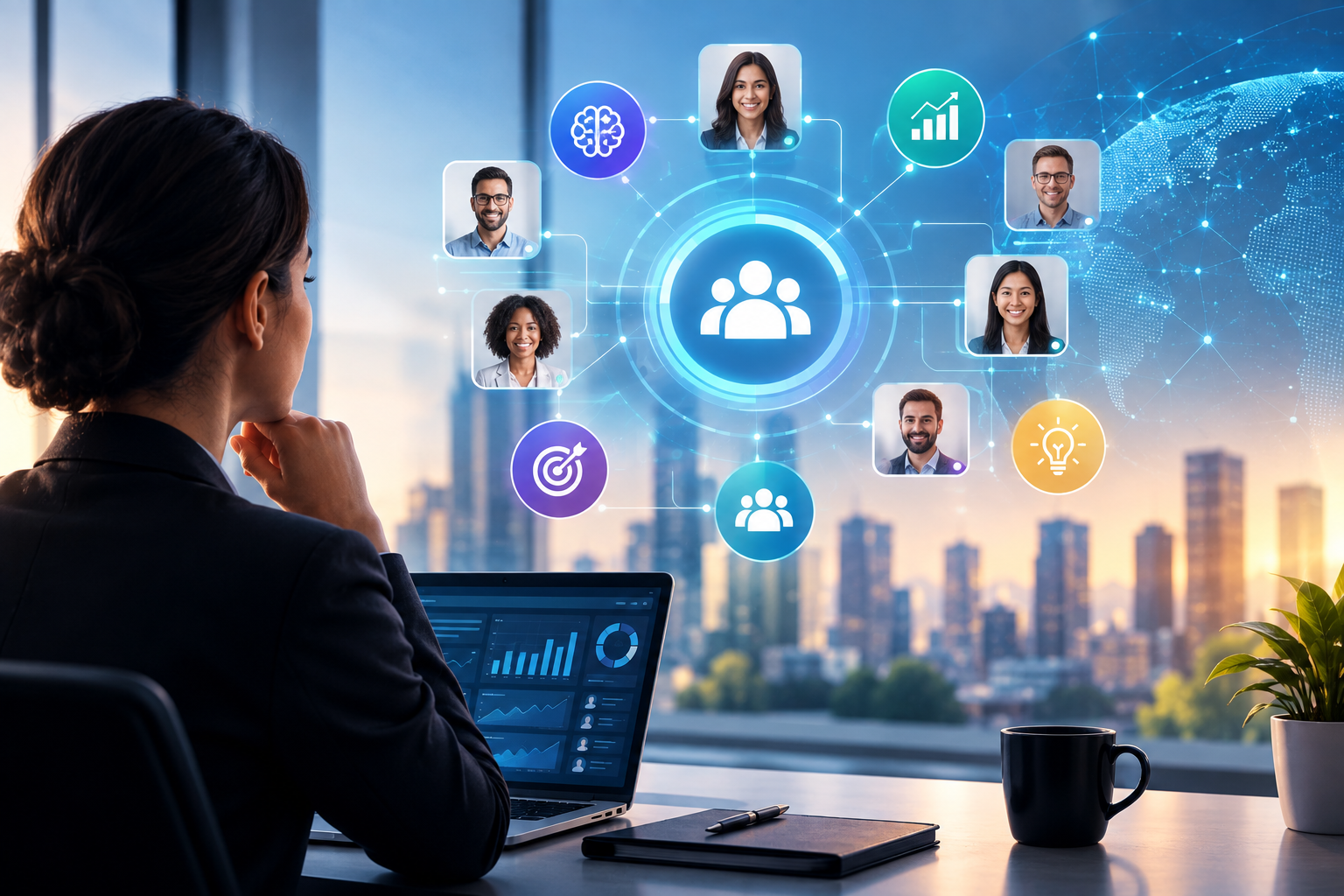

The way companies understand their workforce is changing. For many years, organizations relied on resumes, job descriptions, annual reviews, surveys, and competency frameworks to understand what employees could do. These methods still have value, but they often provide only a partial picture.
Modern organizations generate much more information through projects, reports, workflows, strategy documents, operational records, and other forms of everyday work. This creates an opportunity to understand organizational capability through evidence rather than relying only on self-reported skills.
This is the broader idea behind the Capabilisense Platform and the emerging field of capability intelligence. Available descriptions of Capabilisense position it as an AI-powered approach to understanding organizational capabilities, identifying gaps, and connecting those findings with business strategy.
Its importance goes beyond one platform. Capabilisense illustrates a wider change in workforce technology: moving from simply recording employee information toward understanding whether an organization actually has the capabilities required to achieve its goals.
What Is Workforce Intelligence?
Workforce intelligence is the process of using workforce data to understand employees, teams, skills, capacity, performance, and organizational needs.
Traditional workforce systems are very good at storing information. An HR system might tell a company how many employees it has, which department they belong to, their job titles, or what training they have completed.
But leaders increasingly need answers to more difficult questions.
Can the organization successfully execute a major digital transformation? Does it have enough AI expertise? Which capabilities are missing? Where should employees be trained? Which teams have strengths that could be used elsewhere?
Answering these questions requires more than employee records. It requires understanding capability in context.
That is where capability intelligence becomes important.
What Is the Capabilisense Platform?
The Capabilisense Platform is described as an AI-driven capability intelligence system designed to help organizations understand their real capabilities and readiness for change.
Instead of depending entirely on surveys or manually maintained competency lists, descriptions of the platform emphasize analyzing organizational evidence such as strategy documents, project information, workflows, role descriptions, performance information, and other internal material.
The underlying idea is relatively simple.
Imagine that a company wants to introduce artificial intelligence across its operations.
Management may believe the company is ready because it has software engineers, data analysts, and cloud infrastructure. But having these resources does not automatically mean the organization can implement AI effectively.
It may lack AI governance. Its data may be poorly organized. Employees may lack machine-learning experience. Security processes may not support the proposed systems.
A capability-intelligence approach attempts to identify these gaps before they become expensive problems.
From Skills Management to Capability Intelligence
One of the most important trends highlighted by Capabilisense is the distinction between a skill and a capability.
A skill usually describes something a person knows how to do. Python programming, financial analysis, project management, and database administration are examples.
A capability is broader.
Organizational capability combines people, knowledge, technology, processes, governance, resources, and experience to achieve an outcome.
For example, having employees who understand cloud computing does not necessarily mean an organization has the capability to migrate a large enterprise system to the cloud.
Successful migration could also require security expertise, architecture, governance, project management, budgeting, vendor management, compliance processes, and operational support.
This wider perspective helps explain why capability intelligence could become an important part of workforce planning.
How Capabilisense Changes the Workforce Intelligence Model
Traditional workforce management often starts with the employee:
Who works here, and what skills do they have?
Capability intelligence starts with a different question:
What does the organization need to accomplish, and does it have the capability to accomplish it?
That difference is important.
Capabilisense has been described as analyzing organizational information and turning it into structured capability insights. Public descriptions also emphasize connecting existing plans, workforce capacity, skills, systems, budgets, and transformation priorities.
This suggests a workforce model built around strategy rather than simply employee administration.
The process can be understood as:
Business goal → Required capabilities → Current evidence → Capability gaps → Action
That final action could involve training employees, hiring specialists, changing processes, reallocating resources, improving technology, or reconsidering the original strategy.
Why Static Workforce Data Has Limitations
A major weakness of traditional workforce planning is that information can become outdated quickly.
Consider an employee who was hired three years ago.
Their HR profile may say they are a software developer with Java and SQL experience. Since joining the company, however, they may have worked extensively with Python, cloud infrastructure, generative AI, and data engineering.
Unless somebody updates their profile, much of their actual capability remains invisible.
The opposite can happen too. A profile may list a skill that an employee has not used for years.
This creates a gap between recorded capability and demonstrated capability.
Evidence-based workforce intelligence attempts to reduce that gap by examining signals from real organizational activity.
AI Makes Unstructured Organizational Data More Useful
A large amount of useful business knowledge exists as unstructured data.
It can be hidden inside reports, presentations, project documentation, strategy papers, meeting notes, employee feedback, and other documents.
Historically, analyzing thousands of these documents required enormous amounts of manual work.
Modern AI, particularly natural language processing and large language models, changes this equation.
AI systems can help identify topics, relationships, recurring problems, competencies, risks, and patterns across large document collections.
Descriptions of Capabilisense specifically emphasize using AI to extract capability signals from organizational information and transform them into structured insights.
This points toward an important future direction for enterprise AI: using information organizations already possess to improve workforce and strategic decision-making.
Capability Maps Could Become More Dynamic
Traditional competency frameworks are often updated periodically. A future workforce-intelligence system could operate much more continuously.
Instead of creating a capability assessment once a year, organizations could maintain a more dynamic capability map.
Imagine a dashboard showing that an organization’s cybersecurity capability is strong, AI governance needs improvement, cloud engineering capacity is becoming constrained, and data-management capability has improved during the previous six months.
Leaders could then connect those findings with upcoming initiatives.
This would make workforce planning less reactive.
Rather than discovering a capability shortage halfway through a project, organizations could potentially identify it during planning.
Workforce Intelligence Can Improve Hiring Decisions
Hiring often begins with a department saying:
“We need another data scientist.”
Capability intelligence encourages another question:
“What capability are we actually missing?”
The answer might reveal that another data scientist is not necessary.
Perhaps the company already has enough data scientists but lacks data engineers who can prepare reliable datasets. Or perhaps the real problem is AI governance rather than technical talent.
Understanding the capability gap first can lead to better hiring decisions.
Organizations may discover that they need to recruit, train existing employees, reorganize teams, introduce new technology, or improve a business process.
Hiring becomes one possible solution rather than the automatic solution.
Smarter Upskilling and Employee Development
The same principle applies to training.
Companies spend significant amounts of money on employee learning programs. But generic training does not always address the organization’s most important needs.
Capability intelligence could make development programs more targeted.
If evidence shows that a company has strong technical AI knowledge but weak AI governance, for example, management could focus learning investments on governance, risk, compliance, and responsible AI rather than purchasing another general AI course.
Training then becomes connected to strategic capability gaps.
That connection can benefit both the organization and employees because learning has a clearer purpose.
The Future Is Likely to Be Predictive
Current workforce analytics often explains what has already happened.
The next stage is predicting what might happen.
Future capability-intelligence systems could potentially compare an organization’s current capabilities with its strategic roadmap and identify problems before projects begin.
Suppose a company plans to launch three AI products over the next two years.
A predictive system could examine available talent, technology, governance, budgets, project capacity, and existing workloads. It could then identify areas where capability shortages are likely to appear.
Instead of saying:
“We have a capability problem.”
the system could eventually say:
“If the organization follows this strategy, a capability problem is likely to appear here.”
That shift from descriptive to predictive intelligence could significantly improve workforce planning.
Human Judgment Still Matters
AI-powered workforce intelligence should not be treated as an automatic decision-maker.
Organizational data can be incomplete. Algorithms can misinterpret context. Historical information may contain bias, and quantitative signals do not capture every aspect of human capability.
Privacy is another major consideration.
Systems analyzing workforce information require clear policies around what information is collected, why it is analyzed, who can access the results, and how those insights affect employees.
Organizations should therefore treat AI-generated capability insights as decision support rather than unquestionable truth.
Human managers, HR professionals, domain specialists, and employees still provide context that algorithms may miss.
What Capabilisense Tells Us About the Future
The most interesting lesson from the Capabilisense Platform is not simply about another piece of enterprise software.
It represents a broader change in thinking.
Workforce technology is gradually moving from:
Who do we employ?
to:
What skills do they have?
and ultimately toward:
What can our organization actually accomplish with the people, systems, processes, knowledge, and resources available today?
That final question connects workforce planning directly with business strategy.
The future of workforce intelligence is therefore likely to become more dynamic, evidence-based, AI-assisted, and predictive. Instead of keeping workforce data mainly as administrative records, organizations may increasingly use it to understand readiness, identify capability gaps, guide learning investments, allocate talent, and evaluate whether strategic plans are realistic.
Final Thoughts
The Capabilisense Platform offers a useful lens through which to understand the evolution of workforce intelligence.
Its capability-oriented approach highlights an important limitation of traditional workforce management: knowing people’s job titles and listed skills does not necessarily tell leaders what an organization is capable of achieving.
AI can help close that gap by making large amounts of organizational information easier to analyze. But technology alone is not enough. High-quality data, responsible governance, employee privacy, transparent decision-making, and human judgment remain essential.