

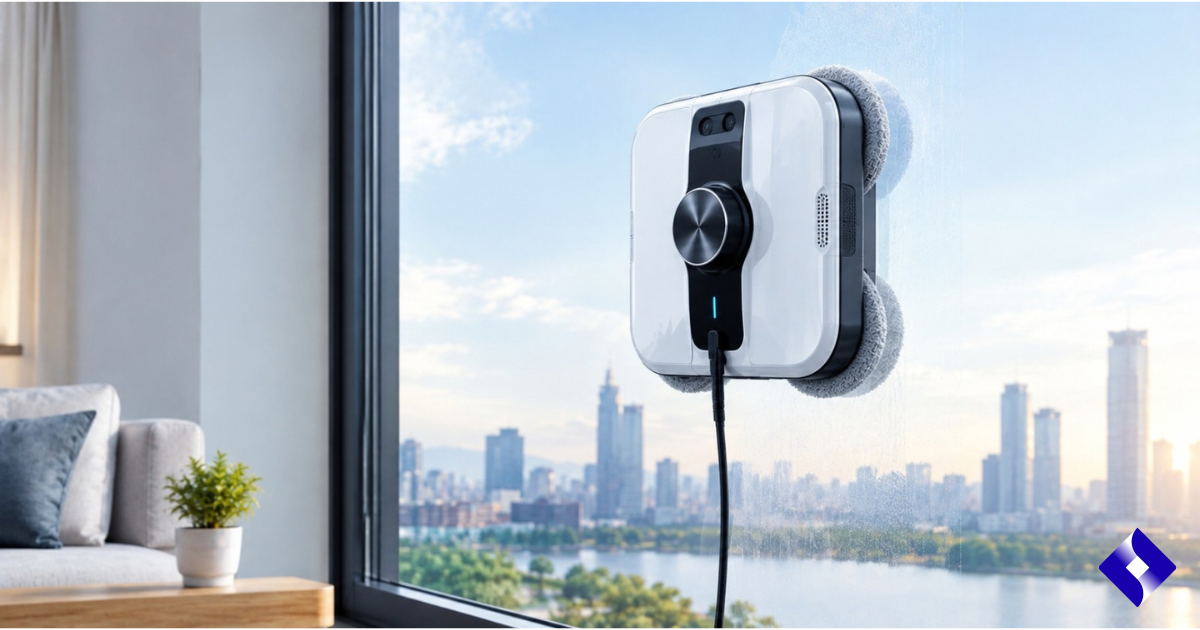

Cleaning large windows, balcony glass, and hard-to-reach surfaces can be time-consuming and labor-intensive. That’s why automatic window cleaning devices have started to gain popularity.
The Yoolax 2.0 smart window cleaning robot is designed to move across glass surfaces using suction, automated cleaning paths, water spray, and microfiber cloths to make routine window maintenance easier.
According to Yoolax, the device uses 2600 Pa suction, multiple cleaning patterns, edge detection technology, four spray nozzles, app control, and a physical remote control.
But how does the system actually work, and where can it be useful in everyday life?
This guide explains the technology, cleaning process, main features, practical applications, safety functions, maintenance needs and limitations of the Yoolax 2.0 smart window cleaning robot .
What is the Yoolax 2.0 smart window cleaning robot?
The Yoolax 2.0 smart window cleaning robot is an automated window cleaning device designed to adhere to the window by suction.
Once placed on the surface, it follows programmed movement patterns while a microfiber cloth remains in contact with the glass.
The robot can also spray water as it moves along the window.
Instead of manually cleaning the entire window with a cloth or squeegee, users can place the robot on a suitable pane of glass, select a cleaning mode, and let it move across the surface.
Currently, the manufacturer lists several automated routes, including N-shaped, Z-shaped, spot, deep cleaning, N left, and N right modes.
This makes the device especially useful for people who have to clean large glass surfaces or windows that are difficult to clean manually.
Yoolax 2.0 Smart Window Cleaning Robot: An Overview
The following table summarizes the main specifications currently offered by Yoolax.
| Feature | Yoolax 2.0 Smart Window Cleaning Robot |
| Suction power | 2600 Pa |
| Navigation | Multiple scheduled cleaning routes |
| Cleaning patterns | N, Z, Dot, Deep N+Z, Left N and Right N |
| Spraying system | Four-nozzle water spray system |
| Control methods | Yoolax Home app and remote control |
| Security technology | Edge detection and fall protection sensors |
| Protection against power loss | UPS Protection |
| Safety cable | 16.4 ft safety rope |
| Cleaning supplies | Washable microfiber cloths |
| Clothing included | 8 |
| N mode speed as indicated by the manufacturer | Approximately 2.85 minutes per m² |
| Appropriate task | Automated cleaning of compatible glass surfaces. |
Source: Yoolax product information.
How does the Yoolax 2.0 smart window cleaning robot work?
The basic idea behind the robot is relatively simple.
It combines suction, movement, moisture, and a cleaning pad into a single automated system.
1. Suction keeps the robot attached to the glass.
The robot generates a suction that allows it to remain attached to a vertical glass surface.
Yoolax indicates that the suction level of model 2.0 is 2600 Pa .
It is important to maintain stable suction because the device needs sufficient grip when moving vertically and horizontally through the window.
Users should follow the manufacturer’s safety instructions and use the supplied safety rope, especially when cleaning high windows.
2. The sensors help detect the edges of the windows.
The robot uses edge detection sensors and anti-fall sensors to identify the boundaries of the cleaning area.
This is especially important when the robot operates on frameless glass.
Instead of relying entirely on a physical window frame to stop its movement, the system is designed to detect when it approaches an edge.
This technology reduces the amount of manual supervision required during normal operation.
3. The robot follows programmed cleaning routes.
Instead of moving randomly across the glass, the Yoolax 2.0 smart window cleaning robot offers different movement patterns.
| Cleaning mode | General use |
| N-shaped mode | Systematic vertical style coverage |
| Z-shaped mode | Systematic coverage of horizontal style |
| N+Z Deep Cleaning | Combines multiple directions of movement |
| Stain removal | It focuses on a smaller area |
| Left N-mode | Start a pattern N in one direction. |
| Right N-mode | An N pattern begins in the opposite direction. |
Currently, Yoolax describes these routes as intelligent cleaning systems designed to improve overall window coverage.
The different modes can be useful because not all windows have the same level or pattern of dirt.
A slightly dusty interior window may only need standard cleaning, while a pane of glass exposed to exterior dust may benefit from a more thorough cleaning.
Four-nozzle water spray system
A notable feature of version 2.0 is its water spray system.
Yoolax explains that the model uses four spray nozzles connected to a water tank. The goal is to distribute moisture across the glass as the robot moves.
Humidity can help soften light dirt and make it easier for the microfiber cloth to pick up dust and debris.
The automatic spray system also reduces the need to manually wet the entire window before cleaning it.
However, using too much water on very dusty windows can sometimes spread the dirt instead of removing it completely. For windows that haven’t been cleaned in a long time, removing loose debris first can improve the final result.
Microfiber cleaning cloths
The cleaning pad is one of the most important parts of any window cleaning robot.
According to the manufacturer, the Yoolax 2.0 smart window cleaning robot package includes eight washable microfiber cloths.
The microfiber works by collecting dust, moisture, fingerprints, and other debris from the surface as the robot moves across the glass.
Having several cloths available can also be useful when cleaning multiple windows.
For example, using a dirty pad on another window can simply transfer residue from one glass surface to another.
Therefore, changing or washing the cloth once it gets dirty can improve cleaning effectiveness.
How fast does the Yoolax window cleaning robot work?
Yoolax provides different cleaning speed figures depending on the movement mode.
| Cleaning route | Speed indicated by the manufacturer |
| N-shaped | 2.85 minutes per m² |
| Z-shaped | 2.96 minutes per m² |
| N+Z Deep Cleaning | 2.86 minutes per m² |
These figures come from Yoolax’s current product catalog.
The actual cleaning time may vary depending on the size of the window, the route chosen, the condition of the glass, obstacles, and whether additional cleaning passes are required.
For this reason, it is best to consider these figures as manufacturer’s reference data, rather than guaranteed results for all households.
Application and remote control
Users can control the robot using the Yoolax Home app or the included remote control.
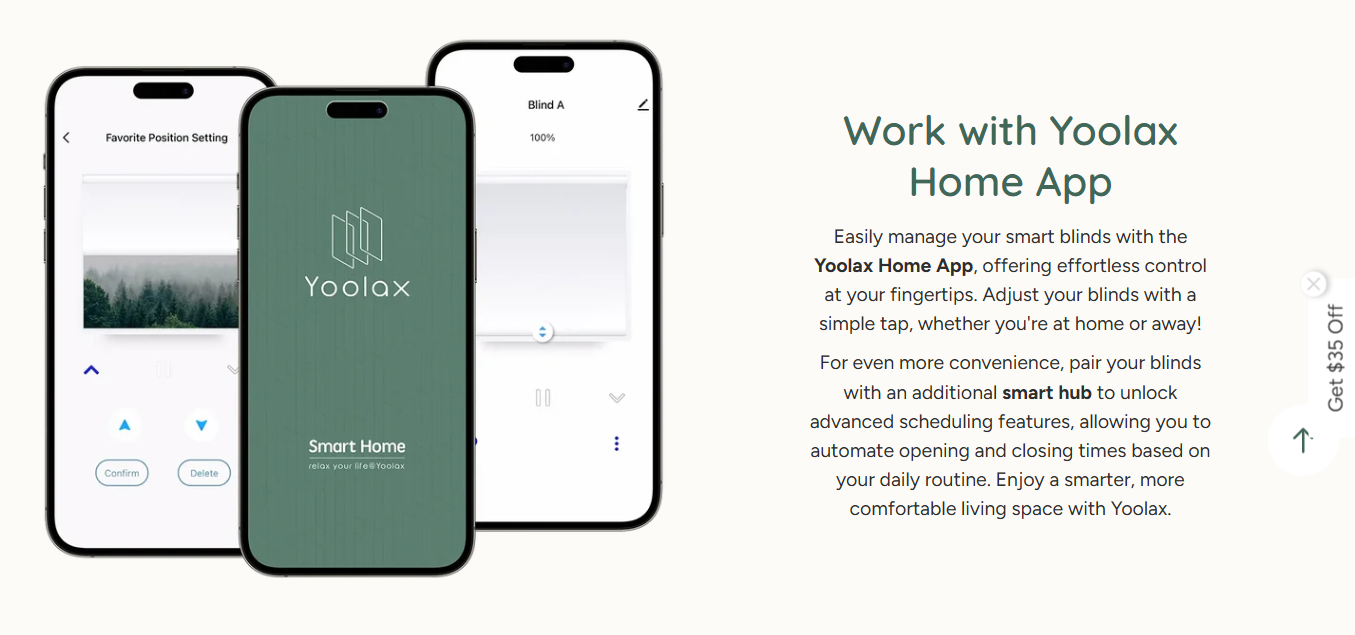
This offers users two ways to manage the cleaning process.
The controls allow you to select different cleaning routes or direct the machine when you need to pay more attention to a particular area.
A physical remote control might be more practical for someone who doesn’t want to rely on a smartphone during every cleaning session.
The app, meanwhile, offers another control option for users who prefer to manage their smart devices from their phone.
Explanation of the security features
Safety is especially important in the case of window cleaning robots, as the device may be operating several meters above the ground or on the exterior of a building.
Therefore, the Yoolax 2.0 smart window cleaning robot uses several layers of protection.
| Security feature | What are you doing |
| 2600 Pa suction | Helps to hold the robot against a compatible glass surface. |
| Edge detection | Identify the limits of the cleaning surface. |
| Frameless fall sensors | It helps detect exposed glass edges. |
| UPS power outage protection | It helps maintain protection in case of a main power supply interruption. |
| Low battery voice alert | Alerts the user when the battery protection is low. |
| 16.4 ft safety rope | It provides a secondary physical security measure. |
Yoolax lists all of these protections in its product documentation.The safety rope remains important even when electronic fall protection systems are available.
Electronic sensors and suction systems should be considered safety features, not a reason to ignore standard precautions.
Everyday uses of the Yoolax 2.0 smart window cleaning robot
The robot is especially useful in situations where manually reaching or repeatedly cleaning large glass surfaces becomes inconvenient.
Large windows in the living room
Modern houses often have large windows that go from floor to ceiling.
Manual cleaning of these surfaces usually involves repeatedly passing a cloth or a glass cleaning spatula over a wide area.
A cleaning robot can take care of most of those repetitive movements.
The user still needs to prepare the device, position it correctly, monitor its operation, and clean the pads afterward.
Glass balcony
Glass balcony railings can quickly accumulate dust, fingerprints, water stains, and debris from the outside.
Automatic window cleaners can help keep these surfaces in good condition when the glass is suitable for the device.
Special care should always be taken when using a robot on elevated outdoor surfaces.
High windows
One of the most important practical reasons for using a window cleaning robot is the reduction of manual effort required.
High windows can be difficult to clean from the ground.
Depending on the window design and safe access to the glass, a cleaning robot can help reduce the need for repeated manual cleaning.
However, this does not eliminate the need for secure placement.
Users should never take unnecessary risks simply to plug in or unplug the machine.
Sliding glass doors
Large sliding doors tend to accumulate fingerprints, dust, pet marks, and everyday debris.
Because these surfaces are usually large and flat, they can be a practical location for automated window cleaning when they are compatible with the robot.
Interior glass partitions
The robot can also be relevant outside of traditional window systems.
Large, smooth glass partitions in home offices or other interior spaces can benefit from the same automated cleaning process, provided the surface meets the manufacturer’s performance requirements.
Is it suitable for frameless windows?
Yoolax specifically mentions the frameless anti-fall sensors and edge detection for the Smart Window Cleaning Robot 2.0.
This suggests that the system is designed to recognize the limits of exposed glass, rather than relying exclusively on a raised frame.
Even so, users should carefully follow the operating instructions when cleaning frameless surfaces.
The thickness of the glass, the condition of the surface, surrounding obstacles, and the design of the installation can affect the safety with which a robot vacuum cleaner can be used.
Can it remove ingrained dirt?
Window cleaning robots are usually the most practical option for routine maintenance.
Dust, fingerprints, light watermarks, and normal surface debris are more realistic cleaning tasks than heavily encrusted buildup.
A window covered with dried mud, thick grease, paint, adhesives, or hardened mineral deposits may require manual preparation or specialized cleaning.
The robot’s microfiber cloth works by repeated physical contact with the glass, so the condition of the pad is also important.
A heavily soiled cloth will generally become less effective as cleaning continues.
Proper cleaning routine
A proper cleaning routine can improve results and reduce unnecessary wear and tear on the machine.
| Scenery | Recommended approach |
| Inspect the glass | Look for cracks, loose debris, or unsuitable surfaces. |
| Prepare the robot | Check the platform, water level, power cord, and safety rope. |
| Remove loose dirt | Remove heavy dirt when necessary. |
| Attach safety rope | Secure it according to the manufacturer’s instructions. |
| Positioning robot | Place it on the compatible cleaning surface. |
| Select the cleaning mode | Choose a route appropriate to the terrain level. |
| Monitor cleaning | Keep an eye on the robot while it is operating. |
| Change out of dirty clothes | Avoid continuing to use heavily contaminated microfiber cloths. |
| Clean after use | Wash the cloths and inspect the robot. |
This type of routine can also help prevent dirt trapped in the cloth from being repeatedly dragged across the window.
Maintenance of the Yoolax 2.0 smart window cleaning robot
Regular maintenance is relatively simple but important.
Microfiber pads should be washed when they get dirty.
The spray nozzles must also be kept clean so that the water is distributed correctly.
The sensors must be kept clean, as dust or debris can interfere with their ability to read the surface correctly.
The suction area should also be inspected periodically.
Before each use, users should check the power cord and safety rope for any obvious wear or damage.
Common problems and possible causes
Most automated cleaning problems are easier to understand when users know which part of the system is responsible.
| Problem | Possible cause |
| The robot is having difficulty docking. | Dirty surface, unsuitable glass, suction blockage. |
| The stripes remain | Dirty microfiber cloth or excess cleaning solution |
| Areas omitted | Incorrect cleaning method or irregular window placement. |
| The water jet weakens. | Low water level or clogged nozzle |
| The robot behaves unexpectedly near the edges. | Dirty sensors or unsuitable surface conditions |
| Cleaning becomes less effective. | The fabric needs to be washed or replaced. |
| The robot stops during operation. | Interruption related to the electricity supply or safety |
Users should consult the official instructions if any safety warnings or unusual operating behavior appear.
Yoolax 2.0 Smart Window Cleaning Robot vs. Manual Window Cleaning
Both automated cleaning and traditional cleaning have their advantages.
| Factor | Yoolax robot cleaning | Manual cleaning |
| Physical exertion | Decrease during active cleaning | Higher |
| Large windows | Convenient | It can be tiring |
| Areas with difficult access | Potentially useful | Additional tools may be required |
| Stain removal | Available through specific modes | Very precise |
| Large accumulation | It may require several passes or preparation. | Easier to scrub manually |
| Setup time | Device preparation required | Minimum |
| Security systems | Sensors, suction, rope | It depends on the user and the equipment. |
| Corners and details | It may still need hand finishing. | Easier to attack directly |
| Routine maintenance | Very suitable | It is also effective, but it requires more manpower. |
These two approaches do not have to compete.
A robot cleaner can take care of regular surface maintenance, while manual cleaning is still useful for edges, tough stains, frames, and occasional deep cleaning.
Who might find this robot most useful?
The Yoolax 2.0 smart window cleaning robot is likely to be most relevant for homes or spaces with large glass surfaces.
People with one or two small windows may not benefit as much from automated cleaning, since preparing the robot can require almost as much effort as cleaning a small pane of glass manually.
Its usefulness increases when the cleaning area expands or the task becomes more repetitive.
Large windows, balcony panels, sliding doors, and multiple glass surfaces are examples where automation can save physical effort.
What’s in the box?
According to the information currently provided by Yoolax, the package contains the main cleaning robot along with several accessories.
| Included item | Amount |
| Window cleaning robot | 1 |
| Portable storage bag | 1 |
| Microfiber cleaning cloths | 8 |
| Remote control | 1 |
| Instruction manual | 1 |
| Safety rope | 1 |
| Power adapter | 1 |
| Power cable | 1 |
| Extension cable | 1 |
| water bottle | 1 |
This combination provides most of the equipment needed for basic operation and maintenance.
Advantages and limitations
No automated cleaning system completely eliminates the need for human intervention.
Understanding what the robot can and cannot do helps users develop realistic expectations.
| Potential advantage | Practical limitation |
| It reduces the need for repeated cleaning. | It requires configuration before each use. |
| Multiple cleaning routes | Irregular glass may require manual realignment. |
| Automated water spraying | Tough stains may still require manual cleaning. |
| Edge detection technology | Safety precautions are still necessary. |
| Application and remote controls | The user must familiarize themselves with the operation. |
| Washable microfiber pads | The pads require regular washing. |
| Useful for large glazed surfaces. | Less practical for very small windows. |
| It can help with routine cleaning | It may still be necessary to finish the frames and corners. |
Is the Yoolax 2.0 smart window cleaning robot worth considering?
The Yoolax 2.0 smart window cleaning robot is best understood as a tool to automate routine glass maintenance, rather than completely replacing traditional window cleaning.
Its combination of 2600 Pa suction, multiple cleaning paths, edge detection sensors, four-nozzle spraying, microfiber pads, app control, remote operation, and safety protections offers users several ways to manage large glass surfaces.
The biggest practical advantage is convenience.
Instead of manually wiping each part of a large window with a cloth, users can let the robot do much of the repetitive cleaning.
However, preparation, safety supervision, pad cleaning, occasional hand finishing, and treatment of difficult marks may still be necessary.
In homes with large windows, glass doors, balcony panels, or other smooth, spacious surfaces, it can be helpful to find a balance between automation and occasional manual cleaning.
Frequently Asked Questions
What is the best device for cleaning windows?
The most suitable device depends on the size of the window and the level of cleaning required. For large or hard-to-reach windows, a window cleaning robot with powerful suction, edge detection, automatic spraying, and safety protection can reduce manual effort.
How much do window cleaning robots cost?
Window cleaning robots typically cost between $170 and $600 or more , depending on navigation, suction power, spray systems, safety features, and included accessories. Current examples include the HOBOT models, which cost between $199 and $299, and the ECOVACS WINBOT models, which reach $500 or more.
How much does a window cleaning robot cost?
A window cleaning robot can cost anywhere from around $170 for a basic model to $600 or more for advanced systems . Higher-priced models typically include better navigation, edge cleaning, app control, improved safety systems, or portable stations.
Do window cleaning robots really work?
Yes, window cleaning robots can be very useful for removing dust, fingerprints, light marks, and for regular glass maintenance. However, stubborn mineral deposits, dried-on dirt, corners, and window frames may require manual cleaning.
Which is the best window cleaning robot of 2026?
There is no single ideal model for all users, as window size, compatibility with frameless glass, safety features, and budget are all important factors. In 2026, established options include the ECOVACS WINBOT and HOBOT models, so comparing suction, navigation, spraying, and fall protection is more useful than choosing based solely on brand.
Is it worth buying a robot vacuum cleaner?
If you frequently clean large windows, balconies, sliding doors, or hard-to-reach surfaces, a window cleaning robot might be worth considering. For a few small windows, traditional manual cleaning may still be easier and cheaper.
Which window cleaning robot is good?
A good window cleaning robot should offer reliable suction, intelligent route planning, edge detection, a safety cable, and even glass coverage. Features like automatic water spray, washable pads, app control, and multiple cleaning modes add convenience.
Also Read:MDA3201-A Robotic Screwdriver: Explanation of its operating principle, applications and advantages.
Final reflections
The Yoolax 2.0 smart window cleaning robot partially automates a task that normally requires repeated manual cleaning, using suction, sensors, programmed movement, water spraying, and microfiber cleaning.
Its main benefit doesn’t necessarily lie in replacing all traditional window cleaning methods. Instead, it can serve as a practical maintenance tool for those who regularly work with large or hard-to-reach glass surfaces.
Knowing how the suction system works, selecting the correct cleaning path, keeping the microfiber pads clean, using the safety cord, and understanding the limitations of automated cleaning can make the device easier and safer to use.
For users researching robotic window cleaning technology, the Yoolax 2.0 offers a useful example of how sensors, programmed navigation, automated spraying, and traditional microfiber cleaning can be combined into a single household device.