


Introduction
Traditionally, creating professional-looking images and videos requires cameras, editing software, voice actors, and considerable post-production work. The growing array of generative AI tools is transforming this process, allowing creators to produce or modify digital content from text, images, and other data.
A2E AI is a platform based on this approach. It combines various AI tools to create and edit images, videos, voices, avatars, and related digital content in a single web environment. According to A2E, its toolset includes video generation from images, image creation from text, face and head swapping, AI avatars, voice cloning, talking photos, lip-syncing, image editing, and clothing swapping.
This guide explains what A2E AI does, how its main features work, where it can be useful, and what users should consider before trusting AI-generated content.
Table of Contents
- What is A2E AI?
- How does A2E AI work?
- Key features of A2E AI
- Practical uses of A2E AI
- Benefits of using A2E AI
- Advantages and disadvantages
- Is A2E AI free?
- Frequently Asked Questions
- Key findings
- Conclusion
What is A2E AI?
A2E AI is an artificial intelligence web platform designed to create, transform, and edit multimedia content. Its approach goes beyond simply converting text to images, encompassing various parts of the modern visual content workflow.
The platform can work with different types of multimedia content, such as images, video, and audio. Depending on the tool used, it can start with a written instruction, an existing image, a video, or a voice recording, and then use AI to generate a modified or entirely new result.
This makes A2E especially relevant for creators who need different types of AI-generated content but don’t want to use a separate service for each stage of production.
How does A2E AI work?
The basic workflow depends on the specific function. For example, generating video from an image starts with a still image and uses artificial intelligence to introduce movement, while generating text to image interprets a written description and creates an image based on the prompt.
Other functions use uploaded media as a starting point. For example, a talking-photo workflow can combine a facial image with generated or provided voice to create a talking animated character. Similarly, voice cloning tools process voice samples to generate speech with the selected voice.
A2E also offers access to multiple AI models for certain generation tasks. This means that the quality and behavior of the output may vary depending on the selected model, the setpoint, the source material, and the generation settings.
Key features of A2E AI
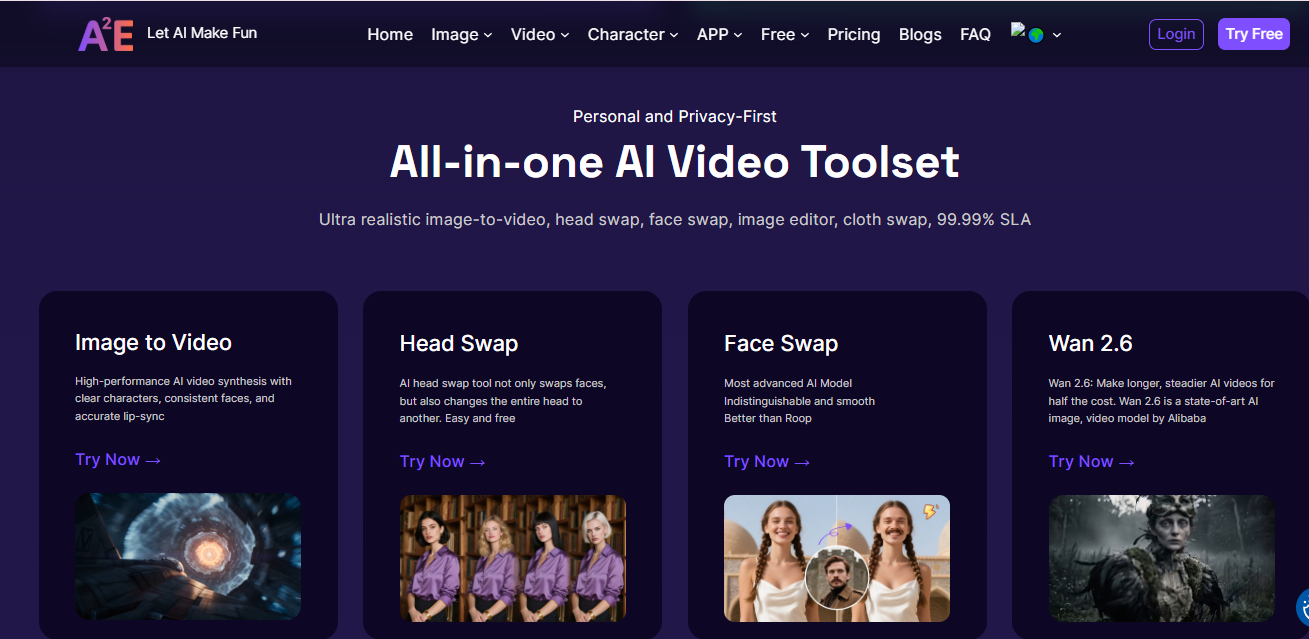
Image to video conversion
The image-to-video conversion function is designed to transform a static image into a moving video. This can be useful for animating portraits, products, illustrations, characters, or other visual elements.
Starting with an existing image can also give creators greater control over the subject’s appearance, compared to generating an entire scene from a text description.
Text-to-image conversion
A2E can generate images from written instructions. Users describe the subject, setting, style, composition, or other visual characteristics, and the AI produces an image based on those instructions.
This can be useful for developing concepts, social media graphics, product images, illustrations, and other creative tasks.
AI avatars and talking photos
AI avatar tools can create digital presenters or characters that communicate using generated voice and facial animation. Similarly, talking photo features allow still images to appear as speaking subjects.
These features can be useful for tutorials, educational materials, demonstrations, and short-form digital content.
Voice cloning
A2E includes a voice cloning feature and supports multiple languages. Its website states that the platform supports over 50 languages for voice cloning and multilingual applications.
However, voice cloning involves considerations of identity and consent. Users should only clone voices when they have the appropriate permission and should avoid using synthetic voices to deceive the public.
Lip sync
Lip-sync technology attempts to coordinate mouth movements with spoken audio. A2E claims that compatible models can generate synchronized speech and facial movements in multiple languages and accents.
The usefulness of this feature depends on the source image, audio quality, language, model, and generation settings. AI-generated lip movements may still require review before release.
Swapping faces and swapping heads
Face swapping alters facial identity within an image or video, while head swapping allows for broader substitution. These tools can have legitimate applications in creative production, experimentation, and visual effects.
Since these functions involve the use of a person’s image, responsible use is essential. Users must obtain permission before manipulating or publishing multimedia content that includes another identifiable person.
Image editing and clothing swapping
A2E also offers AI-assisted image editing and texture swapping features. These tools allow you to modify selected elements of an image without the need for traditional manual editing for each change.
For example, AI-assisted clothing visualization can be useful for e-commerce concepts and product presentations. However, the generated results should be carefully reviewed, as AI-powered editing can sometimes introduce visual inconsistencies.
Practical uses of A2E AI
A2E’s AI can adapt to various content production scenarios.
Social media content creators can use image animations, talking photos, avatars, and generated visuals to create short-form content.
Educators and trainers can explore AI avatars and synthetic storytelling for explainer videos and learning materials.
E-commerce teams can create product-centric images, experiment with virtual clothing presentations, and produce marketing materials without needing to organize a traditional photo shoot for each concept.
Video creators can utilize video generation from images, lip-syncing, voice tools, and other AI-assisted features during the production process.
Developers can also integrate certain A2E functionalities via APIs. A2E documentation indicates that API access is available for features such as AI avatars, image-to-video conversion, and text-to-image generation.
Benefits of using A2E AI
One of the main advantages is the consolidation of the workflow . Instead of having to switch between several specialized AI services, users can access multiple multimedia content generation functions from a single platform.
Another advantage is rapid experimentation . AI-powered generation allows you to test different concepts, visual styles, characters, and animations without having to produce each version manually.
A2E can also lower the technical barrier for those without advanced video editing or graphic design skills. However, ease of generation does not eliminate the need for creative judgment, fact-checking, editing, and quality control.
Advantages and disadvantages
Advantages
- Multiple AI multimedia tools on a single platform.
- Image-to-video and text-to-image conversion capabilities
- AI-powered avatar and talking photo features
- Voice cloning and lip-syncing tools
- Options for swapping faces and heads
- AI-assisted image editing
- API options for selected capabilities
- Useful for experimenting with different content formats.
Disadvantages
- AI-generated results may vary between attempts.
- Complex scenes may require several generations.
- The generated faces, hands, clothing, or backgrounds may contain visual errors.
- Some advanced features use credits or payment plans.
- Users should be mindful of consent and rights when working with faces and voices.
- AI-generated content still benefits from human review and editing.
Is A2E AI free?
A2E currently offers a free plan, though the exact allocation and structure of the paid plan may change over time. Their current pricing information includes a free plan along with paid options and uses a credit-based system for various generation features.
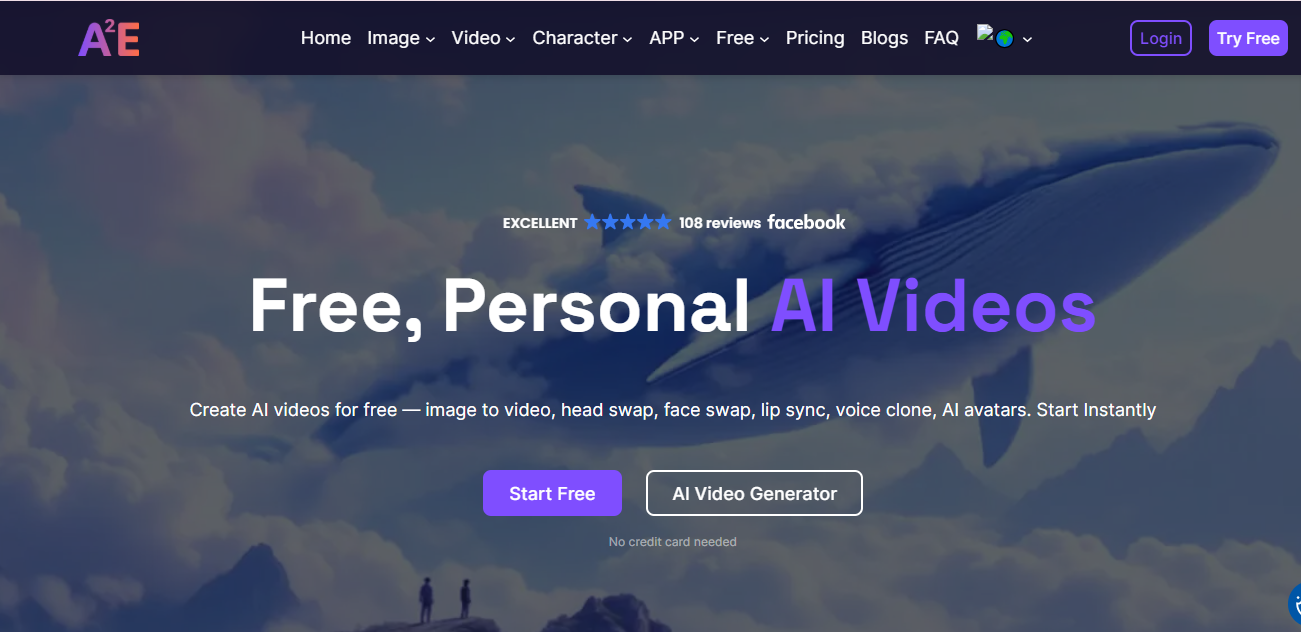
A2E’s FAQ section also states that new users can receive free credits, allowing them to try the platform before opting for a paid option.
Since prices, credits, compatible models, and limits may change, users should consult the platform’s current pricing information before planning a larger production workflow.
Frequently Asked Questions
Is it safe to use A2E AI?
In general, A2E AI can be used safely if users follow responsible AI practices and the platform’s terms. Avoid uploading sensitive information and ensure you have permission to use other people’s images or voices.
What does A2E do?
A2E offers AI-powered tools for creating and editing images, videos, avatars, voice recordings, and other digital multimedia content. Its features include text-to-image and image-to-video conversion, lip-syncing, voice cloning, and AI-powered avatar generation.
Is the A2E AI system down?
A2E AI availability may vary due to maintenance, technical issues, or service interruptions. If the platform is not loading, please check the official status or the A2E website for the latest service information.
What alternatives exist to A2E AI videos?
Among the most popular AI-powered video creation tools are Runway, Kling AI, Pika, Luma, and Synthesia. The best option will depend on whether you need to convert images to video, use avatars, edit videos, or create AI-powered scenes.
Is it safe to use AI?
AI can be safe if used responsibly, but its risks depend on the application and the information provided. Users must protect sensitive data, verify information generated by AI, and comply with applicable privacy and copyright laws.
Key findings
- A2E AI is a multimedia AI platform that covers workflows related to images, video, audio, and avatars.
- Its tools include image-to-video conversion, text-to-image conversion, AI avatars, voice cloning, lip-syncing, face swapping, head swapping, and image editing.
- The platform allows the creation of content for social media, education, e-commerce, and other digital workflows.
- Different AI models can produce different results, so testing and comparisons may be necessary.
- AI-generated content should always be reviewed for quality, accuracy, consent, and appropriate use.
- Prices, credits, available models, and features may change, so it’s advisable to check the platform’s current information before making decisions about workflow or budget.
Conclusion
A2E AI represents a broader trend in content creation: integrating multiple generative AI capabilities into a single workflow. Instead of focusing on a single task, it combines image generation, video animation, avatars, voice tools, lip-syncing, and AI-assisted editing.
For creators, the greatest practical value lies in the ability to experiment with different digital media formats without having to create a completely separate workflow for each one. At the same time, AI does not eliminate the need for human creativity, editing, verification, and responsible use.
Therefore, understanding the capabilities and limitations of each tool is more important than simply generating content. If used judiciously, A2E AI can be just one component of a modern creative workflow, leaving final decisions and quality control in the hands of the creator.