

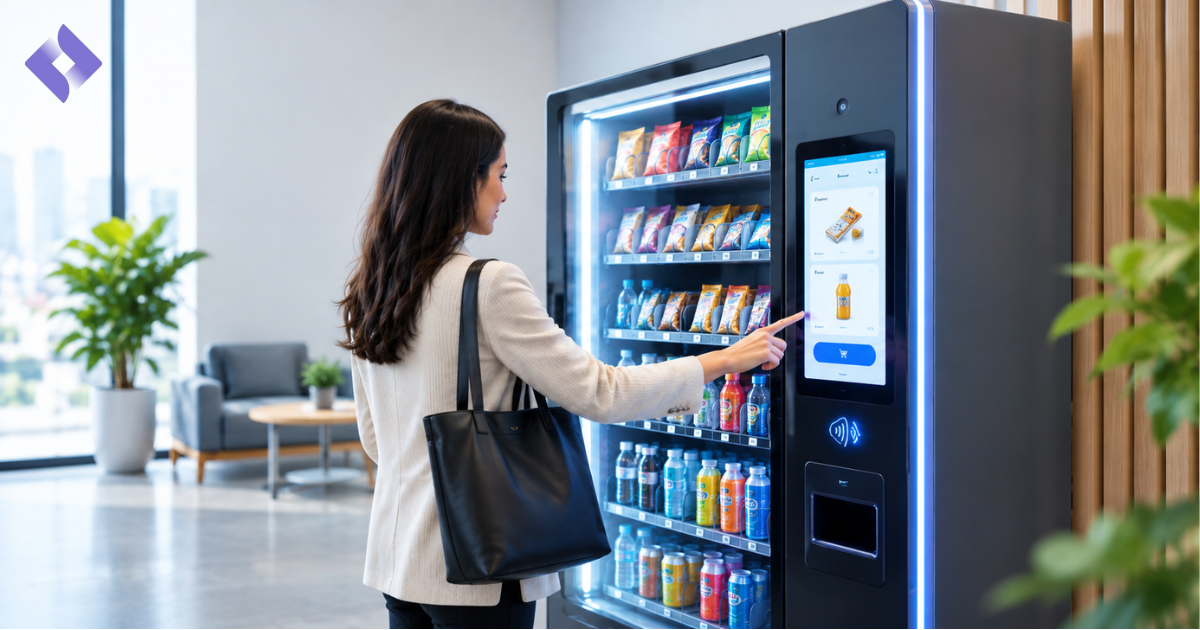

The way people buy everyday products is changing rapidly. Traditional vending machines have been around for decades, offering quick access to snacks, drinks, and essentials. However, many older machines still rely on basic technology, limited payment options, and manual inventory checks.
An AI vending machine represents the next stage in automated retail. By combining artificial intelligence, sensors, computer vision, smart payment systems, and data analytics, these machines can understand customer behavior, manage inventory more efficiently, and provide a seamless shopping experience.
As businesses look for better ways to serve customers with less manual effort, AI-powered vending solutions are becoming a critical part of modern retail environments such as offices, airports, shopping centers, universities, and public spaces.
This guide explains what an AI vending machine is, how it works, what problems it solves, and why smart vending technology is changing the future of automated shopping.
What is an AI vending machine?
An AI vending machine is an intelligent automated retail system that uses artificial intelligence technologies to improve the display, selection, purchase, and management of products.
Unlike traditional vending machines that simply dispense products after receiving payment, AI vending machines can analyze information from cameras, sensors, and software systems to make better decisions.
These machines can identify products, understand customer interactions, monitor inventory levels, detect purchasing patterns, and provide personalized experiences.
| Traditional vending machine | AI vending machine |
| Operates primarily through buttons or touch selection. | Uses intelligent interface and smart recognition. |
| Manual stock checking is required. | Automatically tracks inventory. |
| Limited customer insight | Analyzes customer behavior and preferences. |
| Basic payment options | Supports advanced digital payment systems |
| Limited interaction | Provides a more personalized experience. |
The AI vending machine’s goal is not just to sell products, but to create a more efficient and user-friendly retail experience.
How does an AI vending machine work?
AI vending machines combine multiple technologies that work together to automate the entire purchasing process.
When a user approaches a machine, various systems collect information and respond immediately. The process may seem simple from the outside, but several intelligent components work behind the scenes.
| Technology | Role of AI in vending machines |
| Artificial Intelligence | Helps analyze data and improve decision-making. |
| Computer Vision | Recognizes product and customer interactions. |
| Sensor | Track product movement and machine conditions. |
| Machine Learning | Learns patterns from customer behavior |
| Cloud software | Stores and organizes operational data. |
| Digital payment systems | Enables fast and easy transactions. |
For example, computer vision technology can identify which product a customer selects, while sensors confirm that the correct item has been removed. At the same time, AI software can automatically update inventory information.
Why are AI vending machines becoming more popular?
The development of AI vending machines is linked to changes in consumer expectations and business needs.
Today, people want fast service, convenient shopping options, and easy digital payments. On the other hand, businesses need solutions that reduce operational challenges and improve efficiency.
The modern retail environment faces several common problems:
| Retail Challenge | How AI vending machines help |
| Long waiting times | Provides instant self-service shopping. |
| Manual inventory monitoring | Uses automated stock tracking. |
| Limited customer understanding | Collects useful shopping insights. |
| Product availability issues | Helps assess rehabilitation needs. |
| High operational workload | Reduces the need for constant monitoring. |
By addressing these challenges, AI vending machines provide a more flexible approach to automated retail.
Key Features of AI Vending Machines
AI vending machines differ from traditional vending systems due to their advanced capabilities.
1. Smart Product Identification
The biggest improvement in AI vending technology is product recognition.
Using cameras and computer vision, machines can identify the products selected by customers. This allows for seamless interactions and helps reduce errors during shopping.
For example, instead of selecting a product using multiple buttons, customers can simply select a single item, and the machine automatically recognizes the selection.
2. Automated inventory management
Stock management is the biggest challenge in traditional vending operations.
AI vending machines can monitor product levels in real time. When inventory is low, the system can provide information on which items need to be replaced.
This helps businesses maintain better product availability and reduce unnecessary manual testing.
| Inventory process | Traditional method | AI-based method |
| Stock checking | Manual inspection | Automatic monitoring |
| Product Tracking | Frequent updates | Real-time information |
| Restoring decisions | Based on estimates | Based on the data collected |
3. Personalized customer experience
AI technology allows vending machines to understand customer preferences.
Depending on the environment and available data, smart vending systems can recommend popular products, organize displays, or adjust product availability based on customer demand.
This makes for a shopping experience that feels more connected and relevant.
4. Multiple payment options
Modern consumers prefer convenient payment methods.
AI vending machines often support digital payment options, including contactless payments, mobile wallets, and other electronic methods.
This speeds up purchases and reduces reliance on cash transactions.
5. Remote monitoring and management
Businesses managing multiple vending locations can use a centralized software platform to monitor machine performance.
Operators can check important information such as:
| Monitoring area | Information is available. |
| Inventory | Product level and availability |
| Sales pattern | Popular products and demand trends |
| Machine health | Technical performance update |
| Customer activity | Usage patterns and preferences |
This allows businesses to make better decisions without having to physically check each machine.
AI helps solve vending machine problems.
Although vending machines provide convenience, the traditional system has several limitations.
AI vending technology helps overcome many of these problems.
Reducing product shortages
A common problem with vending machines is product outages. Customers may visit a machine expecting a specific item but find it unavailable.
AI-based inventory tracking helps businesses understand when products need to be replaced.
Improving recovery
Traditional vending machines often require manual inspection to identify problems.
Smart systems can detect unusual conditions and provide alerts, helping operators respond quickly.
Understanding customer demand
Without data, businesses can struggle to understand which products consumers prefer.
AI systems can analyze shopping trends and help improve product selection.
Creating better user experiences
Customers expect quick and convenient services. AI vending machines provide seamless interactions through faster payments, intelligent recognition, and improved accessibility.
Where are AI vending machines used?
AI vending technology is spreading across many different industries.
| Industry | Example of applications |
| Offices | Snacks, drinks, employee essentials |
| Airport | Travel products and quick refreshments |
| Universities | Food, drinks and daily necessities |
| Healthcare facilities | Personal care items and convenience products |
| Hotel | Guest needs and self-service options |
| Shopping centers | Automated retail experiences |
The flexibility of AI vending machines makes them suitable for locations where customers need quick and easy access to products.
Benefits of AI vending machines for businesses
Businesses are adopting smart vending technology because it can improve operational efficiency and customer satisfaction.
| Benefit | Explanation |
| Better performance | Automates many daily administrative tasks. |
| Better customer service | Provides fast shopping experiences. |
| Data-driven decisions | Helps understand product demand. |
| Less manual workload | Reduces frequent physical examinations. |
| Flexible operation | Can serve customers outside of traditional store hours |
However, the success of an AI vending machine depends on proper planning, appropriate placement, product selection, and regular maintenance.
Challenges of AI vending machines
While AI vending machines offer many benefits, businesses must also consider some challenges.
| Challenge | Explanation |
| Initial investment | Advanced technology may require higher setup costs. |
| Care requirements | Software and hardware require regular updates. |
| Data management | Systems must handle customer information responsibly. |
| Technical issues | Connectivity issues can affect performance. |
Understanding these factors helps businesses decide whether AI vending technology suits their needs.
The future of AI vending machine technology
The future of AI vending machines is tied to the development of automated retail and smart technology.
As artificial intelligence continues to improve, vending machines may become more advanced with features such as:
| Future development | Possible impact |
| Better personalization | More related product recommendations |
| Advanced identification systems | Fast and smooth shopping |
| Better automation | Less manual management |
| Integration with smart environments | Better connectivity with the digital ecosystem |
AI vending machines are likely to become a bigger part of everyday shopping as consumers continue to seek out convenient and efficient experiences.
AI vending machine vs. traditional vending machine: which is better?
Traditional and AI vending machines serve the same basic purpose, but their capabilities differ.
| Factor | Traditional vending machine | AI vending machine |
| Technology | Basic mechanical and digital systems | AI-powered technology |
| Customer interaction | Limited | More interactive |
| Inventory tracking | Manual | Automatic |
| Data collection | Minimum | Advanced analytics |
| Management | Need to check frequently. | Remote monitoring is possible. |
For businesses looking for simple product distribution, traditional machines can still do the job. However, organizations looking for improved operations and better customer experiences can benefit from AI-powered solutions.
Frequently Asked Questions
What is an AI vending machine?
An AI vending machine is an automated retail machine that uses artificial intelligence, sensors, and smart software to improve product selection, payment processing, inventory management, and customer interaction.
How does an AI vending machine identify products?
AI vending machines can use cameras, sensors, and computer vision technology to recognize products and track customer selections.
Do AI vending machines need the internet?
Most AI vending machines require an internet connection to enable features like remote monitoring, software updates, inventory tracking, and data analysis. However, some basic functions can continue to work offline, depending on the machine’s design.
How do they know what I took?
AI vending machines use technologies such as cameras, sensors, and computer vision to identify which product a customer selects. These systems track the movement of products and automatically update purchase information.
Can I put something back if I change my mind?
It depends on the type of AI vending machine. Some smart machines allow customers to return items before completing payment, while others finalize the purchase after removing the products.
Are they better than traditional coil machines?
AI vending machines offer more advanced features, including smart inventory management, digital payments, and customer insights. Traditional coil machines are simpler and can still be suitable for locations that only need basic product dispensing.
Final thoughts
AI vending machines represent a major shift in automated retail by combining convenience with intelligent technology . They help businesses better manage inventory, understand customer needs, and provide faster self-service experiences.
As artificial intelligence becomes more prevalent in everyday environments, smart vending solutions are expected to continue to evolve. The future of retail will likely include more technology-driven experiences where automation and customer convenience work together.
Understanding how AI vending machines work today provides insight into how people might interact with automated shopping systems in the years to come.