


Introduction
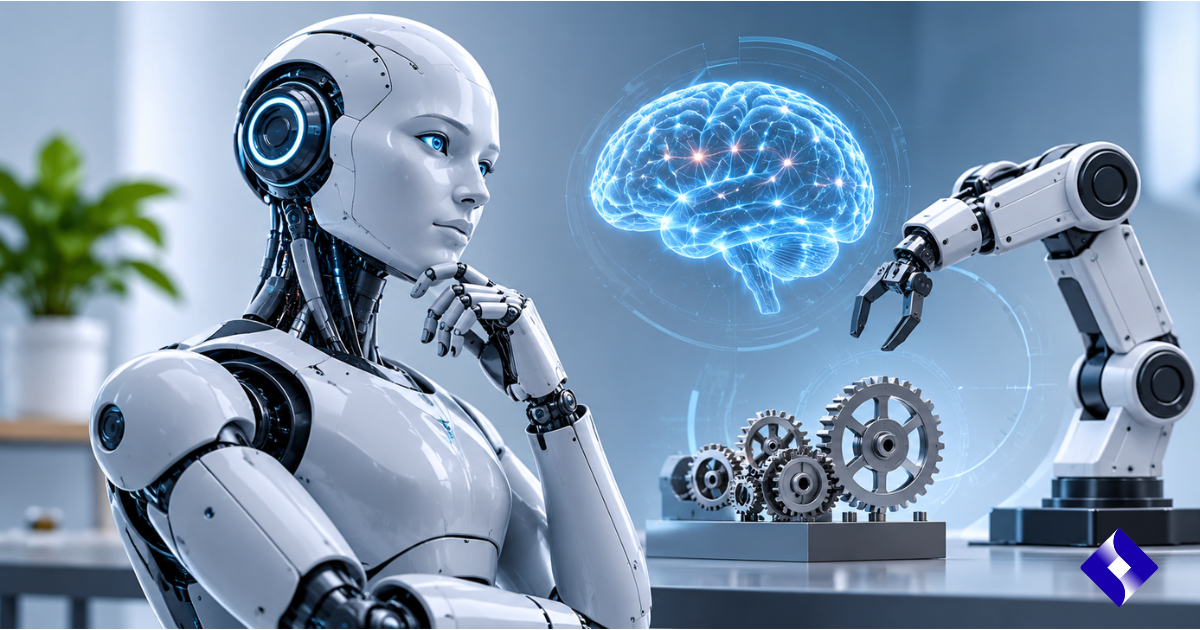
Robots are becoming an important part of modern life. They help manufacture cars, deliver packages, explore dangerous environments, assist medical professionals, and perform tasks that would otherwise require significant human effort. Although robots can look and behave differently, most rely on a combination of mechanical components, electronic systems, software, and programmed instructions.
But how do robots work, and what allows them to perform tasks with such precision? The answer involves several technologies working together. Sensors collect information from the surrounding environment, processors interpret that information, and motors or other actuators carry out physical actions.
Understanding these systems makes robotics easier to explain, whether you are interested in industrial automation, educational robots, artificial intelligence, or everyday robotic devices. This guide explores the main components of robots, how they operate, and the technology that allows them to interact with the world.
Table of Contents
- What Is a Robot?
- How Do Robots Work?
- What Are the Main Parts of a Robot?
- How Do Robots Sense Their Environment?
- How Do Robots Process Information and Make Decisions?
- How Do Robots Move and Perform Tasks?
- How Does Artificial Intelligence Help Robots?
- Different Types of Robots and How They Work
- Key Features of Modern Robots
- Benefits of Using Robots
- Pros and Cons of Robotics
- Frequently Asked Questions
- Conclusion
- Key Takeaways
1. What Is a Robot?
A robot is a programmable machine designed to perform physical tasks automatically or with some degree of human control. It can follow instructions, respond to environmental information, manipulate objects, and complete repetitive or complex activities.
Robots come in many forms. Some are simple machines designed to perform one specific movement, while others use advanced sensors, computer systems, and artificial intelligence to operate in changing environments.
For example, an industrial robotic arm can repeatedly weld vehicle components, while a robotic vacuum cleaner moves around a home and detects obstacles. Both are robots, but their designs and operating systems are different.
Unlike ordinary machines that perform a fixed mechanical function, many robots can be programmed to carry out different tasks by changing their instructions or software.
2. How Do Robots Work?
Robots work by combining mechanical hardware, electronic components, sensors, and computer software. These systems allow them to receive information, process instructions, and perform physical actions.
Most robotic systems follow a basic operating process:
Step 1: Receiving Instructions
A robot needs instructions before it can perform a task. These instructions may come from a computer program, a human operator, a remote controller, or an intelligent decision-making system.
For instance, a factory robot may be programmed to pick up a metal component, move it to a specific position, and place it on an assembly line.
Step 2: Collecting Information Through Sensors
Sensors help robots understand what is happening around them. Depending on their design, robots can detect distance, temperature, light, pressure, movement, and other environmental conditions.
A warehouse robot, for example, may use cameras and distance sensors to identify obstacles and navigate through storage areas.
Step 3: Processing Information
Once information is collected, the robot’s controller or computer processes it. The system compares sensor readings with programmed instructions and determines what action should happen next.
Some robots follow straightforward instructions, while more advanced models use algorithms and AI to respond to changing situations.
Step 4: Performing Physical Actions
After processing the information, the robot sends commands to its actuators. These components control movement and physical operations, such as rotating wheels, extending robotic arms, or gripping objects.
Step 5: Checking the Results
Many robots use feedback systems to check whether an action was completed correctly. If the robot detects a difference between its intended movement and actual position, its controller can make adjustments.
This process is particularly important in applications that require accuracy, such as manufacturing and medical robotics.
3. What Are the Main Parts of a Robot?
A robot consists of several interconnected components. Each part has a specific responsibility, but the entire system must work together for the machine to operate successfully.
The following table explains the most important robotic components.
| Robot Component | Main Function | Example |
|---|---|---|
| Sensors | Collect information from the environment | Cameras and distance sensors |
| Controller | Processes instructions and coordinates operations | Microcontroller or computer |
| Actuators | Produce physical movement | Electric motors |
| Power Supply | Provides energy to the robot | Batteries or electrical connections |
| Mechanical Structure | Supports and connects components | Frame, joints, and wheels |
| End Effector | Interacts with objects or materials | Robotic gripper or welding tool |
| Software | Controls operations and programmed behavior | Navigation and motion-control programs |
Mechanical Structure
The mechanical structure forms the physical body of a robot. It includes frames, joints, wheels, links, and other components that support movement and hold different parts together.
Its design depends on the intended application. A walking robot needs articulated legs and joints, whereas a factory robot may use a fixed base and several rotating arms.
Sensors
Sensors provide information about the robot’s surroundings and internal condition. They help detect obstacles, measure distances, monitor temperature, and identify objects.
Without suitable sensors, many robots would struggle to respond accurately to changes in their environment.
Controller and Processor
The controller acts as the central coordination system. It receives information, executes programmed instructions, and sends commands to other components.
Depending on the robot’s complexity, its controller might be a small microcontroller, an embedded computer, or a more powerful computing platform.
Motors and Actuators
Actuators convert electrical, hydraulic, or pneumatic energy into physical movement. Electric motors are common in robotics, although hydraulic cylinders and pneumatic systems are also used.
These components allow robots to rotate joints, move wheels, lift materials, and operate tools.
4. How Do Robots Sense Their Environment?
Robots use different types of sensors to collect information about their surroundings. The specific sensors depend on the tasks they need to perform.
For example, a self-driving robotic platform requires information about nearby objects and its position, while a robotic hand needs sensors that help it control gripping force.
Common robotic sensors include:
- Cameras: Capture images and video to help identify objects and understand surroundings.
- Ultrasonic sensors: Measure distance by transmitting sound waves and detecting their returning echoes.
- Infrared sensors: Detect infrared radiation or use reflected infrared light for proximity measurements.
- LiDAR sensors: Measure distances using laser light to build detailed representations of surrounding spaces.
- Touch sensors: Detect physical contact or pressure.
- Temperature sensors: Measure heat and temperature changes.
- Gyroscopes and accelerometers: Help measure orientation, rotation, and acceleration.
These technologies allow robots to gather useful information before performing an action.
However, sensing does not automatically mean understanding. A robot still needs suitable software to interpret sensor readings and use them to make decisions.
5. How Do Robots Process Information and Make Decisions?
Once sensors collect information, the robot’s control system must determine what to do with it. This process is handled through programming, algorithms, and control systems.
A simple robot may follow a fixed sequence of instructions. For example, a robotic arm might move to a predetermined position, close its gripper, lift an object, and place it somewhere else.
More advanced robots use feedback-based control. Their controllers continuously compare the desired result with actual sensor measurements and adjust their actions when necessary.
Open-Loop Control
Open-loop control involves executing instructions without using feedback to correct the action. The robot follows a predefined sequence, regardless of whether its environment changes.
This approach can work well for predictable tasks where the conditions remain consistent.
Closed-Loop Control
Closed-loop control uses feedback from sensors to adjust the robot’s behavior. If a robotic arm moves slightly away from its target position, the controller can detect the difference and correct it.
This makes closed-loop systems useful for applications requiring precision, stability, and reliable movement.
6. How Do Robots Move and Perform Tasks?
Robotic movement depends on mechanical design and the actuators used to control it. Different robots use different movement systems depending on their working environment.
For example, mobile robots may use wheels or tracks, while humanoid robots use articulated legs and arms. Industrial robotic arms rely on joints that rotate or extend to position tools and objects.
Electric Motors
Electric motors are widely used in robotics because they provide controllable movement. They can rotate wheels, operate joints, and power different mechanical systems.
Servo motors are particularly useful when a robot needs controlled angular positioning. Stepper motors are commonly used when predictable incremental movement is required.
Hydraulic Systems
Hydraulic actuators use pressurized liquid to generate force. They are useful in heavy-duty robotic applications that require substantial lifting or pushing power.
Pneumatic Systems
Pneumatic actuators use compressed air to create movement. They are often used in industrial automation, especially for simple repetitive operations.
End Effectors
An end effector is the component attached to the end of a robotic arm that interacts directly with an object or material.
Examples include grippers, suction cups, welding equipment, and specialized cutting tools. The end effector determines what physical operation a robot can perform.
7. How Does Artificial Intelligence Help Robots?
Artificial intelligence has expanded what some robots can accomplish. Traditional robots generally depend on predefined instructions, whereas AI-powered systems can use data and algorithms to recognize patterns, interpret information, and adapt to certain situations.
For example, a warehouse robot equipped with computer vision can identify packages, recognize obstacles, and support navigation. A robot using machine learning may also improve a particular task through training and experience.
Several AI technologies contribute to modern robotics:
Computer Vision: Helps robots analyze images and identify objects, people, and environmental features.
Machine Learning: Allows systems to identify patterns in data and improve performance on specific tasks through training.
Natural Language Processing: Helps certain robots interpret spoken or written human instructions.
Reinforcement Learning: Enables a system to learn actions through interaction with an environment, using rewards or penalties to guide its behavior.
However, not every robot uses artificial intelligence. Many industrial robots operate effectively with traditional programming and carefully designed control systems.
AI also does not make robots completely independent. Their capabilities remain limited by their hardware, training data, software, and operating conditions.
8. Different Types of Robots and How They Work
Robots are designed for different industries and environments. Their structure, programming, and operating methods depend on the problems they are intended to solve.
| Type of Robot | How It Works | Common Applications |
|---|---|---|
| Industrial Robots | Use programmed movements and robotic arms to perform manufacturing operations | Welding, painting, and assembly |
| Mobile Robots | Use wheels, tracks, or other movement systems to navigate | Warehouses and delivery |
| Humanoid Robots | Use articulated limbs and control systems to perform human-like movements | Research and human interaction |
| Medical Robots | Use precise mechanical systems controlled by software and medical professionals | Surgical assistance and rehabilitation |
| Agricultural Robots | Combine sensors, cameras, and mechanical equipment to perform agricultural tasks | Crop monitoring and harvesting |
| Domestic Robots | Use sensors and programmed behavior to complete household activities | Vacuuming and lawn maintenance |
Industrial Robots
Industrial robots are commonly found in manufacturing facilities. They perform repetitive operations such as welding, material handling, painting, and assembling products.
Their movements are often programmed in advance, although some systems also use cameras and sensors to respond to changing production conditions.
Mobile Robots
Mobile robots move through physical environments using wheels, tracks, or legged movement systems. They may use cameras, LiDAR, and other sensors to identify obstacles and plan routes.
Autonomous mobile robots are particularly useful in warehouses, where they transport goods between storage areas and workstations.
Humanoid Robots
Humanoid robots are designed with human-like physical structures, including a head, torso, arms, or legs. They use motors, joints, sensors, and software to coordinate their movements.
Their development involves significant challenges, particularly balance, energy efficiency, and reliable interaction with people.
Medical Robots
Medical robots support healthcare professionals in specialized procedures and rehabilitation activities. Some surgical robotic systems allow trained surgeons to control instruments with high precision.
These systems do not independently replace medical professionals. They operate within carefully designed clinical workflows and require appropriate human supervision.
9. Key Features of Modern Robots
Modern robots include different features depending on their intended purpose. However, several capabilities are commonly found in advanced robotic systems.
Automation: Robots can perform programmed tasks with limited human intervention.
Precision: Properly designed robotic systems can repeat movements with a high degree of consistency.
Sensing Capabilities: Sensors allow robots to collect information about objects, movement, and environmental conditions.
Programmability: Software can change how a robot performs a task without necessarily changing its physical structure.
Adaptability: Some robots can adjust their behavior based on sensor feedback or AI-based processing.
Connectivity: Network connections allow certain robots to exchange information with computers, control systems, and other devices.
10. Benefits of Using Robots
Robotics offers several practical benefits across manufacturing, healthcare, agriculture, transportation, and other industries.
One major advantage is the ability to automate repetitive work. Robots can perform the same operation repeatedly, helping organizations maintain consistent production processes.
They can also operate in environments that may be dangerous for people, such as areas involving extreme temperatures, toxic substances, or heavy machinery.
Other important benefits include:
- Improved productivity: Robots can perform repetitive tasks efficiently and support continuous operations when properly maintained.
- Greater consistency: Automated systems can reduce variations in repeated manufacturing activities.
- Enhanced safety: Robots can handle certain hazardous tasks and reduce human exposure to dangerous conditions.
- High precision: Specialized robotic equipment can perform controlled movements for detailed operations.
- Support for healthcare: Medical and rehabilitation robots can assist professionals with specialized procedures and patient care.
- Reduced repetitive workload: Automation allows workers to focus on tasks requiring judgment, communication, and problem-solving.
11. Pros and Cons of Robotics
Although robots offer significant advantages, their use also creates technical, financial, and operational challenges.
| Pros | Cons |
|---|---|
| Automate repetitive activities | Initial setup can be expensive |
| Improve consistency in production | Require maintenance and technical support |
| Work in hazardous environments | May struggle with unexpected situations |
| Perform precise mechanical operations | Depend on power and functioning components |
| Support complex industrial processes | Require skilled programming and supervision |
| Increase operational efficiency | Can affect certain employment roles |
The overall value of a robotic system depends on its application. A robot that works effectively in a controlled factory environment may not perform equally well in an unpredictable outdoor setting.
Organizations must consider installation costs, maintenance requirements, worker training, safety procedures, and long-term performance before introducing robotic automation.
12. Frequently Asked Questions
1. How do robots work in simple terms?
Robots work by receiving instructions, collecting information through sensors, processing data with a controller, and performing actions through motors or other actuators. These components work together to complete programmed tasks.
2. Do all robots use artificial intelligence?
No, not all robots use AI. Many robots rely on traditional programming and control systems to perform specific tasks, while advanced models may use machine learning and computer vision.
3. What are the five main parts of a robot?
Five common parts are the mechanical structure, sensors, controller, actuators, and power supply. Together, these components allow a robot to receive information, process instructions, and perform physical actions.
4. How do robots know what to do?
Robots follow instructions stored in their software or received from external control systems. Sensors provide additional information that allows some robots to adjust their actions according to environmental conditions.
5. How do robots move?
Robots move using actuators such as electric motors, hydraulic cylinders, and pneumatic systems. These components control wheels, joints, robotic arms, and other mechanical structures.
6. Can robots work without human control?
Some robots can perform predefined tasks autonomously without continuous human input. However, most still require people for programming, supervision, maintenance, safety management, or decision-making in unusual situations.
7. Where are robots commonly used?
Robots are used in manufacturing, healthcare, agriculture, logistics, education, space exploration, and domestic environments. Their applications depend on their design, capabilities, and operating requirements.
8. What is the difference between a robot and an ordinary machine?
An ordinary machine generally performs a specific mechanical function, while a robot is programmable to carry out tasks through controlled physical actions. Many robots also use sensors to respond to information from their surroundings.
Conclusion
Robots work through the coordinated operation of mechanical structures, sensors, controllers, actuators, power systems, and software. Each component performs a specific role, allowing the machine to receive instructions, understand relevant information, and complete physical tasks.
While basic robots may follow fixed instructions, more advanced systems can use feedback, computer vision, and artificial intelligence to respond to changing conditions. These capabilities have made robotics useful in industries ranging from manufacturing and agriculture to healthcare and transportation.
As robotic technology continues to develop, understanding how robots work will become increasingly valuable. Their future will depend not only on better hardware and intelligent software but also on safe design, responsible implementation, and effective collaboration between humans and machines.
Key Takeaways
- Robots are programmable machines designed to perform physical tasks.
- Sensors collect information about the environment and the robot’s condition.
- Controllers process information and coordinate robotic operations.
- Motors and actuators produce the movements required to complete tasks.
- Feedback systems help robots correct movements and improve accuracy.
- Artificial intelligence gives some robots additional abilities, including object recognition and adaptive behavior.
- Different types of robots serve specific purposes in industries, healthcare, agriculture, and everyday life.
- Human supervision, maintenance, and safety remain important parts of modern robotics.