



Introduction
Healthcare organizations are under increasing pressure to improve financial performance while maintaining a high-quality patient experience. Rising administrative costs, complex insurance processes, claim denials, staffing shortages, and changing reimbursement rules have made revenue cycle management (RCM) one of the most challenging areas for hospitals and health systems.
Traditionally, many healthcare providers have relied on RCM BPO (Business Process Outsourcing) companies to manage medical billing, claims processing, coding, payment posting, and denial management. These outsourcing partners provide experienced teams that handle revenue cycle tasks on behalf of healthcare organizations.
However, the rapid growth of artificial intelligence has introduced a new approach. AI-powered healthcare technology vendors such as Hyro AI are helping organizations automate patient communication, scheduling, administrative workflows, and operational processes through intelligent AI agents. Hyro focuses on automating healthcare conversations and workflows across channels such as voice, websites, SMS, and digital platforms.
This creates an important question for healthcare leaders:
Should organizations continue investing in traditional RCM BPO services, adopt AI-powered healthcare automation, or combine both approaches?
The answer depends on operational needs, budget, compliance requirements, scalability goals, and the level of automation an organization wants to achieve.
Table of Contents
- Understanding Healthcare Revenue Cycle Management
- What Is a Hyro AI HealthTech Vendor?
- What Is an RCM BPO Solution?
- Hyro AI vs RCM BPO: Key Differences
- Key Features Comparison
- Benefits of AI Healthcare Automation
- Benefits of RCM Outsourcing
- Pros and Cons of Hyro AI HealthTech Vendors
- Pros and Cons of RCM BPO Services
- How Healthcare Organizations Should Choose
- Frequently Asked Questions
- Conclusion
- Key Takeaways
Understanding Healthcare Revenue Cycle Management
Healthcare revenue cycle management includes every administrative and financial process involved in receiving payment for healthcare services.
The process begins when a patient schedules an appointment and continues through:
- Patient registration
- Insurance verification
- Medical coding
- Charge capture
- Claim submission
- Payment processing
- Denial management
- Patient billing
- Revenue reporting
A well-managed revenue cycle helps healthcare providers reduce payment delays, improve cash flow, and minimize revenue leakage.
However, traditional revenue cycle operations often depend heavily on manual work. Employees spend significant time handling repetitive tasks such as answering patient questions, checking insurance details, following up on claims, and resolving billing issues.
This is where AI technology and RCM outsourcing provide different solutions.
What Is a Hyro AI HealthTech Vendor?
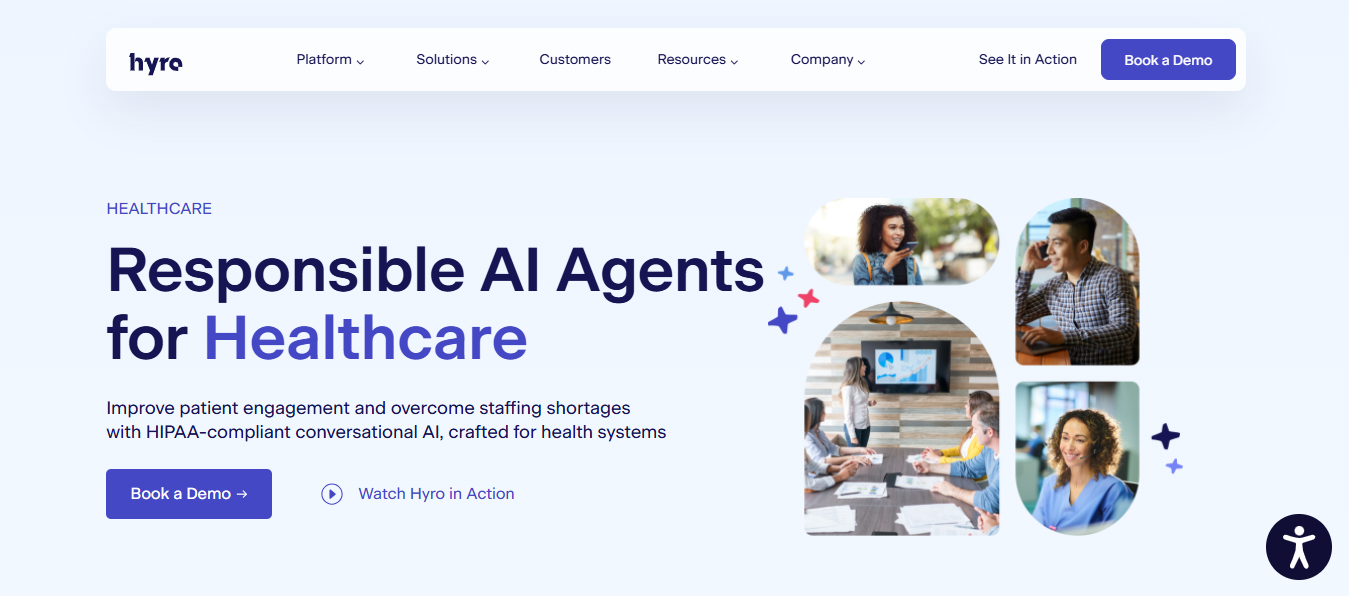
A Hyro AI HealthTech vendor represents a technology-first approach to healthcare automation. Instead of replacing entire revenue cycle departments, AI platforms focus on improving efficiency by automating repetitive communication and administrative workflows.
Hyro provides AI agents designed for healthcare organizations that can support patient interactions across multiple channels, including phone systems, websites, messaging platforms, and mobile applications.
These AI systems can help with tasks such as:
- Appointment scheduling
- Appointment reminders
- Patient FAQs
- Prescription refill requests
- Patient navigation
- Basic billing inquiries
- Call center automation
The goal is to reduce unnecessary manual interactions and allow healthcare employees to focus on higher-value activities.
What Is an RCM BPO Solution?
An RCM BPO provider is an external company that manages healthcare revenue cycle tasks using trained professionals.
These companies typically provide services including:
- Medical billing
- Insurance verification
- Claims submission
- Medical coding
- Denial management
- Accounts receivable follow-up
- Payment posting
- Revenue reporting
RCM outsourcing has been widely adopted because healthcare organizations can access experienced specialists without building large internal teams.
For many hospitals and physician groups, RCM BPO remains an effective solution for managing complex billing operations.
Hyro AI HealthTech Vendor vs RCM BPO: Key Differences
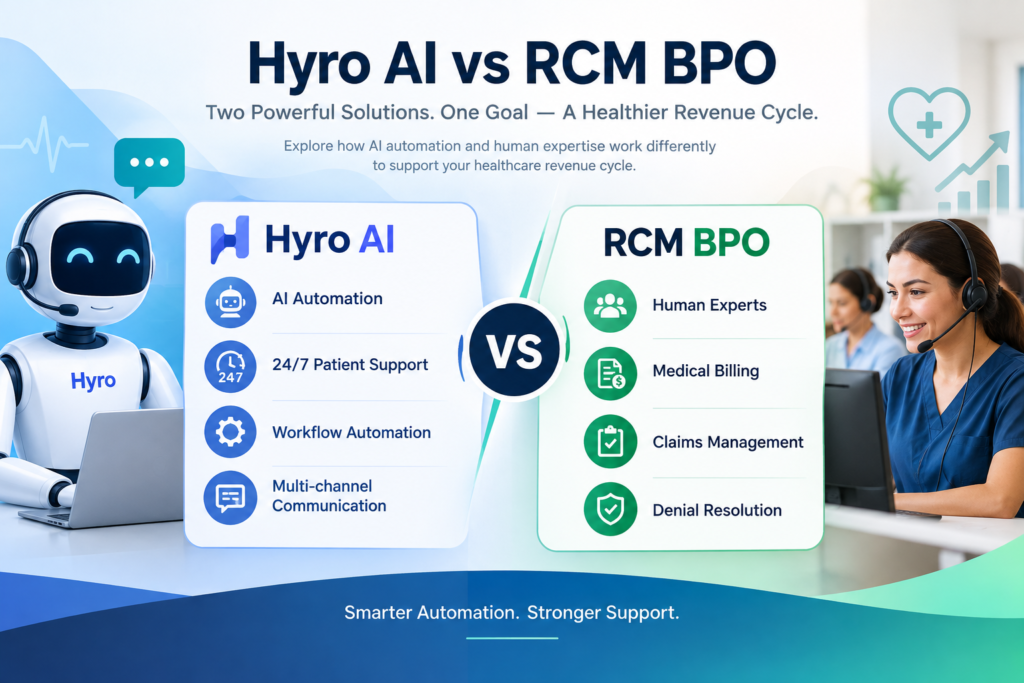
| Factor | Hyro AI HealthTech Vendor | RCM BPO |
| Primary Approach | Artificial intelligence automation | Human-powered outsourcing |
| Main Focus | Patient communication and workflow automation | Revenue cycle operations |
| Workforce Model | AI agents | Human specialists |
| Scalability | Rapid digital scaling | Requires additional staff |
| Response Time | Instant automated responses | Depends on team availability |
| Complex Judgment | Limited to programmed workflows | Human decision-making |
| Cost Structure | Technology investment | Service-based fees |
| Best For | Automation and efficiency | Complete revenue cycle support |
Key Features of Hyro AI HealthTech Solutions
1. AI-Powered Patient Communication
Healthcare organizations receive thousands of patient inquiries every month. Many questions are repetitive, including appointment availability, location information, preparation instructions, and billing questions.
AI agents can respond instantly and reduce call center workload.
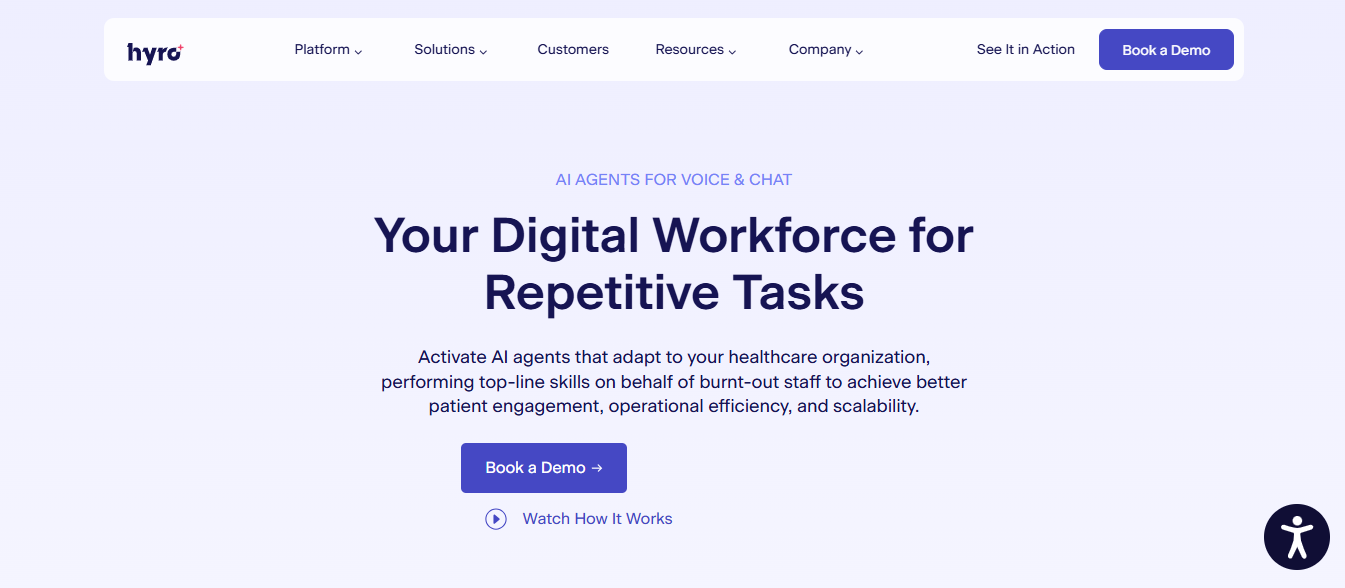
2. Multi-Channel Healthcare Support
Modern patients expect healthcare access through different channels.
AI healthcare platforms can support:
- Voice calls
- Website chat
- SMS messaging
- Mobile applications
This creates a smoother patient experience.
3. Workflow Automation
AI solutions can automate routine administrative processes.
Examples include:
- Appointment scheduling
- Patient reminders
- Data collection
- Basic insurance-related questions
Automation reduces employee workload and improves operational consistency.
4. Integration With Healthcare Systems
Healthcare organizations require technology that works with existing systems.
AI vendors often focus on integration with electronic health record (EHR) platforms and healthcare communication systems. Hyro, for example, highlights healthcare integrations including connections with platforms such as Epic.
Key Features of RCM BPO Services
1. Experienced Revenue Cycle Teams
RCM outsourcing companies provide trained specialists who understand:
- Insurance rules
- Coding requirements
- Claim procedures
- Payer policies
2. End-to-End Billing Support
Many RCM BPO providers handle complete revenue cycle operations, from claim creation to payment collection.
3. Human Problem Solving
Healthcare billing often involves complicated cases that require human judgment.
Examples include:
- Denied claims
- Insurance disputes
- Documentation issues
- Complex payer requirements
Human teams can analyze these situations more effectively.
Benefits of Choosing Hyro AI HealthTech Vendors
Improved Operational Efficiency
AI reduces repetitive administrative work and allows healthcare employees to focus on more important tasks.
Faster Patient Response
Patients no longer need to wait for office hours or long call queues for basic information.
Lower Administrative Burden
Healthcare organizations can reduce pressure on call centers and front-office teams.
Better Scalability
AI systems can handle increasing communication volumes without requiring proportional staff growth.
Benefits of Choosing RCM BPO Services
Access to Skilled Professionals
Healthcare organizations gain access to specialists without hiring and training large internal teams.
Better Handling of Complex Billing Issues
Experienced RCM professionals can manage challenging cases that require human expertise.
Reduced Internal Management Requirements
Outsourcing eliminates the need to manage large billing departments internally.
Pros and Cons of Hyro AI HealthTech Vendors
Pros
Faster patient communication
Reduces repetitive workload
Available 24/7
Supports digital healthcare transformation
Improves workflow efficiency
Cons
Requires technology investment
Needs proper integration
Cannot replace all human decision-making
Requires ongoing monitoring and optimization
Pros and Cons of RCM BPO Services
Pros
Experienced healthcare billing teams
Handles complex revenue cycle processes
Reduces internal hiring needs
Provides operational support
Cons
Less automation compared with AI solutions
Quality depends on vendor performance
Communication delays may occur
Outsourcing requires strong vendor management
How Healthcare Organizations Should Choose the Right Revenue Cycle Solution
There is no universal solution for every healthcare organization.
The right choice depends on business objectives.
Choose Hyro AI If:
A healthcare organization wants to:
- Automate patient communication
- Reduce call center pressure
- Improve digital patient access
- Scale operations efficiently
- Reduce repetitive administrative work
AI is especially useful for organizations looking to modernize patient engagement.
Choose RCM BPO If:
A healthcare organization needs:
- Complete billing management
- Human expertise
- Denial resolution support
- Coding and claims specialists
- Revenue cycle outsourcing
RCM BPO remains valuable for organizations that need operational support rather than only automation.
Consider a Hybrid Approach
Many healthcare organizations may benefit from combining both solutions.
A hybrid model can include:
- AI automation for routine patient interactions
- RCM specialists for complex billing cases
- Human oversight for compliance and decision-making
This approach allows organizations to improve efficiency while maintaining accuracy.
Frequently Asked Questions
What is the difference between Hyro AI and RCM BPO?
Hyro AI focuses on healthcare automation using artificial intelligence, while RCM BPO relies on human professionals to manage revenue cycle processes such as billing, coding, and claims.
Can AI completely replace RCM outsourcing?
No. AI can automate many repetitive processes, but complex billing decisions, compliance issues, and claim disputes often require human expertise.
Is RCM BPO still relevant with AI adoption?
Yes. RCM BPO continues to provide value because healthcare billing involves complex regulations and payer requirements.
Is patient data safe when using an AI healthtech vendor vs. an offshore BPO?
Patient data security depends on the provider’s compliance standards, encryption practices, access controls, and adherence to healthcare regulations such as HIPAA. Both AI healthtech vendors and offshore BPO providers must implement strong security measures to protect sensitive patient information.
Can Hyro AI replace my entire RCM billing team?
No, Hyro AI is designed to automate communication and administrative workflows rather than replace complete revenue cycle teams. Human experts are still essential for complex billing decisions, claim disputes, compliance reviews, and revenue cycle management tasks.
Conclusion
The decision between a Hyro AI HealthTech vendor vs RCM BPO solution is not simply about choosing technology over people. It is about selecting the right operational model for an organization’s goals.
AI healthcare vendors bring automation, speed, and scalability. RCM BPO providers bring experience, human expertise, and complete revenue cycle management capabilities.
For organizations focused on improving patient communication and reducing administrative workload, AI-powered healthcare automation can deliver significant advantages. For those struggling with complex billing operations, outsourcing remains a strong option.
The future of healthcare revenue cycle management will likely combine both approaches — using artificial intelligence for efficiency while keeping skilled professionals involved where human judgment matters most.
Key Takeaways
- Hyro AI focuses on healthcare automation and patient communication workflows.
- RCM BPO provides human expertise for billing, claims, and revenue cycle operations.
- AI improves speed, scalability, and administrative efficiency.
- RCM outsourcing handles complex financial processes requiring human judgment.
- A hybrid AI + RCM strategy may provide the strongest long-term solution.
- Healthcare organizations should choose based on their operational challenges, not technology trends alone.