


Introduction
Digital identity has become a fundamental part of everyday life. From accessing financial services and managing workplace accounts to shopping online and communicating through social platforms, individuals regularly share information that allows digital systems to recognise and authenticate them.
As these interactions increase, so does the importance of protecting personal information from unauthorised access.
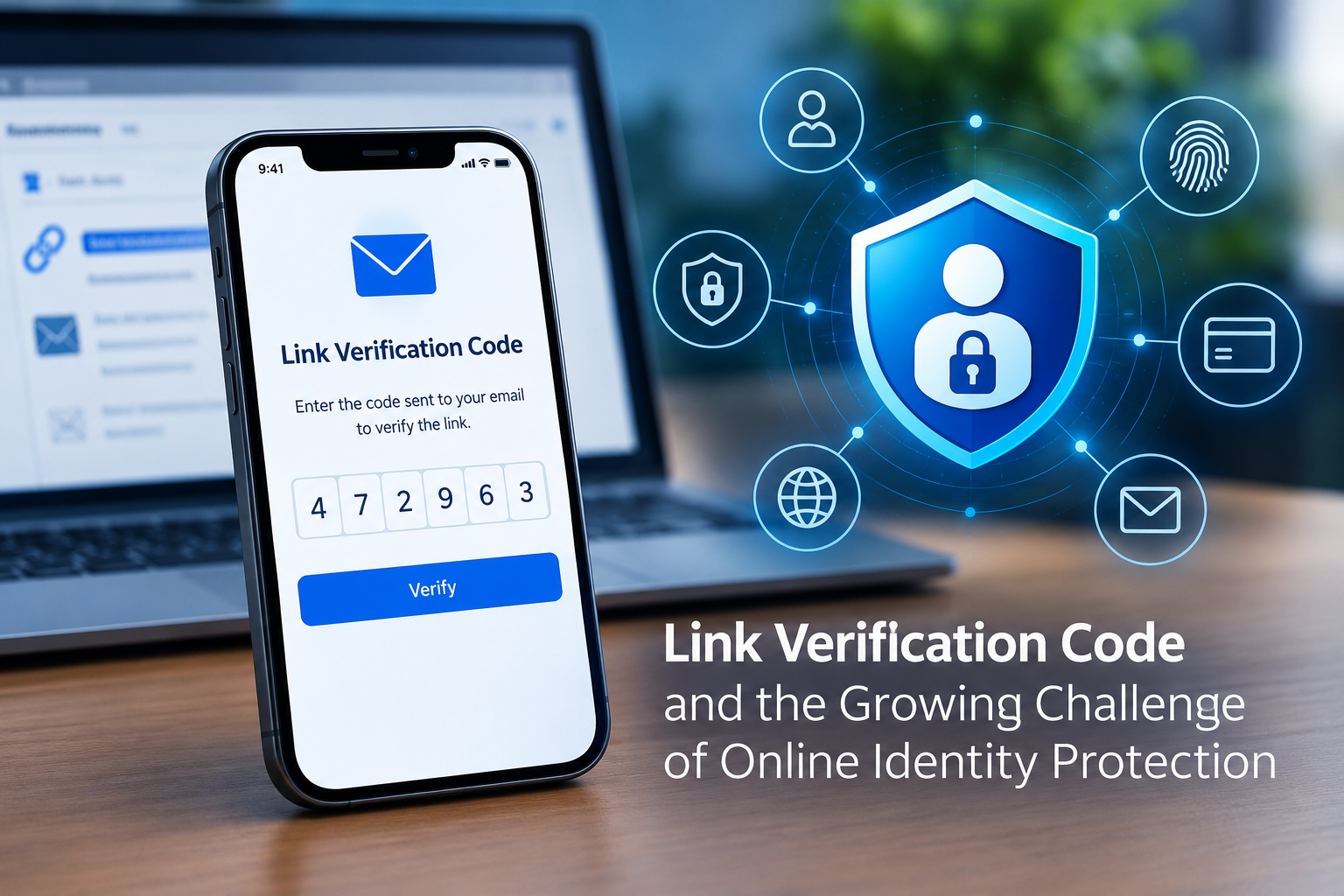
One commonly used security mechanism is the link verification code text, a message that provides a temporary authentication code or verification link to help confirm a user’s identity or validate a specific action.
Although these messages may appear straightforward, they operate within a complex digital security environment. Their effectiveness depends on how verification systems are designed, how users interact with them, and how organisations respond to evolving cyber threats.
Understanding the purpose, limitations, and security implications of text-based verification is increasingly important for both consumers and businesses.
Understanding Link Verification Code Text and Its Purpose
A link verification code text generally refers to an SMS message containing a one-time verification code, a confirmation link, or both. These messages are commonly generated when someone attempts to create an account, sign in, reset a password, or approve a sensitive transaction.
The primary objective is to establish that the person performing an action has access to a particular phone number.
For example, an online platform may request a mobile number during registration. The system then sends a temporary code that the individual must enter before continuing. Alternatively, the platform may deliver a verification link that confirms access when opened.
These methods introduce an additional authentication step, helping reduce reliance on passwords alone.
However, possession of a phone number does not necessarily establish someone’s legal identity. It primarily demonstrates access to a communication channel at a particular moment.
This distinction is essential when evaluating the security of modern identity verification systems.
Why Online Identity Protection Has Become More Challenging
Online identity protection has evolved beyond preventing unauthorised password access. Modern digital environments involve interconnected applications, cloud-based platforms, mobile devices, and third-party services that exchange information continuously.
Each connection can introduce potential security vulnerabilities.
Cybercriminals increasingly exploit human behaviour alongside technical weaknesses. Rather than attempting to break sophisticated encryption, attackers may impersonate trusted organisations, create convincing login pages, or persuade individuals to disclose authentication codes.
The widespread availability of personal information through data breaches and public online profiles can also make impersonation attempts more convincing.
A fraudulent message that includes someone’s name, phone number, or familiar service provider may appear legitimate even when it originates from an attacker.
Consequently, organisations must consider identity protection as a combination of technology, user awareness, and operational security.
How Text Message Verification Works
Text-based verification typically follows a structured authentication process.
When a user initiates an action requiring confirmation, the service generates a temporary code or a unique verification link. The system associates that verification challenge with the user’s account or current session.
The message is then delivered to the registered mobile number through an SMS service provider.
After receiving the message, the user either enters the code into the original application or follows the verification link.
The platform checks whether the submitted information matches the expected value and whether the verification request remains valid.
Well-designed verification systems generally incorporate several safeguards, including limited code validity, restrictions on repeated attempts, and controls that prevent a previously used code from being accepted again.
These measures help reduce the risk of automated guessing and unauthorised reuse.
However, the security of the process also depends on whether the legitimate user initiated the request and whether the verification message reaches the intended recipient.
The Security Benefits and Limitations of SMS Verification
SMS verification remains widely used because it is accessible, familiar, and compatible with most mobile phones. Unlike specialised authentication applications, text messages generally do not require users to install additional software.
For businesses serving diverse audiences, this accessibility can simplify account registration and recovery.
Text-based verification can also provide a useful additional barrier when combined with a password. An attacker who obtains a password may still need access to the associated verification message.
Nevertheless, SMS verification has important limitations.
Phone numbers can be compromised through SIM-swapping attacks, in which criminals fraudulently transfer a victim’s mobile number to another SIM or device. Attackers may also manipulate users into sharing codes through phishing or social engineering.
Additionally, traditional SMS delivery does not provide the same phishing resistance as modern cryptographic authentication methods.
These limitations do not make SMS verification inherently useless. Instead, they demonstrate why organisations should evaluate it according to the sensitivity of the accounts and transactions being protected.
For higher-risk environments, stronger authentication methods may be more appropriate.
The Growing Threat of Verification Code Phishing
One of the most significant challenges involving a link verification code text is the increasing sophistication of phishing attacks.
Fraudulent messages may imitate banks, technology companies, delivery services, or government agencies. They often create a sense of urgency by claiming that an account has been suspended, a suspicious transaction has occurred, or immediate verification is required.
The objective is to persuade the recipient to open a malicious link, disclose personal information, or share a legitimate authentication code.
Some attacks involve criminals initiating a genuine password-reset or login request using the victim’s account details. The legitimate service then sends an authentic verification message to the victim.
The attacker subsequently contacts the individual and attempts to obtain that code.
In this scenario, the verification message itself may be genuine, but the surrounding interaction is fraudulent.
This highlights an important principle: receiving a legitimate verification code does not automatically mean the request was initiated by the account owner.
Users should therefore avoid sharing verification codes with anyone, including individuals claiming to represent customer support.
How Businesses Can Strengthen Verification Security
Organisations implementing SMS-based verification should treat authentication as part of a broader identity security strategy rather than an isolated technical feature.
Effective verification systems begin with secure code generation and careful management of authentication requests. Codes should be unpredictable, time-limited, and invalidated after successful use.
Businesses should also implement appropriate rate limits to reduce automated attacks and suspicious repeated requests.
Verification messages should clearly identify the service responsible for sending them and explain the purpose of the code without exposing sensitive personal information.
For example, a login verification message should distinguish itself from a password-reset or transaction-approval message.
Organisations can further strengthen protection through risk-based authentication, which evaluates factors such as unusual login behaviour, unfamiliar devices, or unexpected geographic activity.
For particularly sensitive operations, businesses may require additional verification rather than relying exclusively on SMS.
Security teams should also monitor authentication failures, suspicious account recovery attempts, and unusual changes to registered phone numbers.
These controls can help identify potential account takeover attempts before they result in significant harm.
Why User Experience Matters in Identity Verification
Security and usability are frequently treated as competing priorities, but effective authentication requires both.
A verification process that is unnecessarily complicated may frustrate legitimate users, increase support requests, or encourage insecure workarounds.
Conversely, a process designed exclusively for convenience may expose accounts to avoidable risks.
Businesses should therefore develop verification experiences that communicate instructions clearly and minimise unnecessary friction.
Messages should explain why verification is required, how long a code remains valid, and what users should do if they did not request it.
Accessible design is equally important. Some individuals may experience delayed SMS delivery, limited mobile connectivity, or difficulty navigating complex authentication interfaces.
Providing suitable alternative authentication methods can improve both accessibility and security.
The objective is not simply to make verification faster. It is to create an authentication experience that users can understand and complete safely.
SMS Verification Versus Modern Authentication Alternatives
As digital threats become more sophisticated, organisations are increasingly evaluating alternatives to traditional text-based verification.
| Authentication method | Main advantage | Key limitation |
|---|---|---|
| SMS verification | Broad accessibility and familiar experience | Vulnerable to SIM swapping and phishing |
| Authenticator apps | Codes generated independently of SMS delivery | Standard one-time codes can still be phished |
| Email verification | Convenient for users with secure email access | Depends on the security of the email account |
| Passkeys | Cryptographic authentication resistant to phishing | Requires appropriate platform and account support |
| Hardware security keys | Strong phishing-resistant authentication | Requires compatible devices and key management |
Passkeys are particularly important in discussions about the future of digital identity protection.
Unlike traditional one-time codes, passkeys use public-key cryptography and are designed to authenticate users to the legitimate service without requiring them to manually disclose a shared secret.
This approach can significantly reduce the effectiveness of credential phishing.
However, organisations still need reliable account recovery procedures and suitable options for users whose devices or circumstances do not support their preferred authentication method.
Practical Ways Individuals Can Protect Their Digital Identity
While businesses are responsible for implementing secure authentication systems, individuals also play an important role in protecting their accounts.
Users should treat unexpected verification messages as potential indicators of attempted account access, particularly when they appear alongside unfamiliar login notifications.
A code should only be entered into a service that the user intentionally opened and recognises as legitimate.
Links received through unexpected text messages deserve additional scrutiny. Rather than following a suspicious link, individuals can open the official application or manually navigate to the service’s known website.
It is also important to protect the mobile account itself. A carrier account PIN or other available safeguards may help reduce certain SIM-swapping risks.
For sensitive accounts, individuals should consider enabling passkeys or other phishing-resistant authentication methods where supported.
Regularly reviewing account activity, maintaining updated recovery information, and securing primary email accounts can provide additional protection.
These habits are particularly valuable because attackers often target account recovery processes when direct login attempts are unsuccessful.
The Future of Link Verification Code Text in Digital Security
Text-based verification is unlikely to disappear immediately. Its widespread compatibility and ease of deployment continue to make it useful in many digital services.
However, the role of SMS authentication is changing as organisations adopt stronger identity protection technologies.
Future verification systems are likely to place greater emphasis on phishing resistance, contextual risk assessment, device-based authentication, and secure account recovery.
Artificial intelligence may also support fraud detection by identifying unusual authentication patterns, although automated systems require careful oversight to avoid false positives and privacy concerns.
For businesses, the challenge will be determining where SMS verification remains appropriate and where stronger authentication should become the default.
For consumers, understanding the differences between verification methods will become increasingly important as more services introduce passkeys and other alternatives.
The long-term direction of digital identity security is not simply toward more verification steps. It is toward authentication systems that offer stronger protection while remaining practical and accessible.
Read more: What Is Aiurare and How Does It Differ From Ordinary Confusion or Daydreaming?
Frequently Asked Questions
What is a link verification code text?
A link verification code text is an SMS message containing a temporary authentication code or verification link. It is commonly used to confirm access to a phone number during account registration, login, password recovery, or other security-sensitive actions.
Is a verification code received by text message safe?
SMS verification can provide an additional layer of security, especially when combined with a password. However, it is vulnerable to phishing, SIM swapping, and other attacks. It should not be considered completely secure.
Why did I receive a verification code without requesting one?
An unexpected code may result from someone entering your phone number accidentally or attempting to access an account associated with it. Do not share the code or open suspicious links. Check the account through its official application or website if you are concerned.
Can someone access my account using a verification code?
A verification code may allow an attacker to complete a login, password reset, or other protected action if the attacker has initiated the corresponding request. Never disclose a code to another person.
How long does a text verification code remain valid?
The validity period varies by service. Many verification codes expire after a few minutes, although some systems use different time limits. Always follow the instructions provided by the legitimate service.
Are passkeys more secure than SMS verification?
Passkeys generally provide stronger protection against phishing because they use cryptographic authentication tied to the legitimate website or application. SMS verification remains useful in some circumstances but does not offer the same level of phishing resistance.
Conclusion
The growing reliance on digital services has made identity verification an essential component of online security. A link verification code text offers a convenient method for confirming access to a mobile number and supporting account authentication, but it cannot independently guarantee that an interaction is legitimate.
As phishing, account takeover, and social engineering threats evolve, organisations must look beyond basic verification codes and develop more comprehensive security strategies.
For individuals, recognising suspicious messages and protecting authentication information remain fundamental precautions.
Ultimately, effective online identity protection depends on combining secure technology, thoughtful authentication design, and informed user behaviour. The most resilient digital environments will be those that make identity verification both trustworthy and practical.