


Introduction
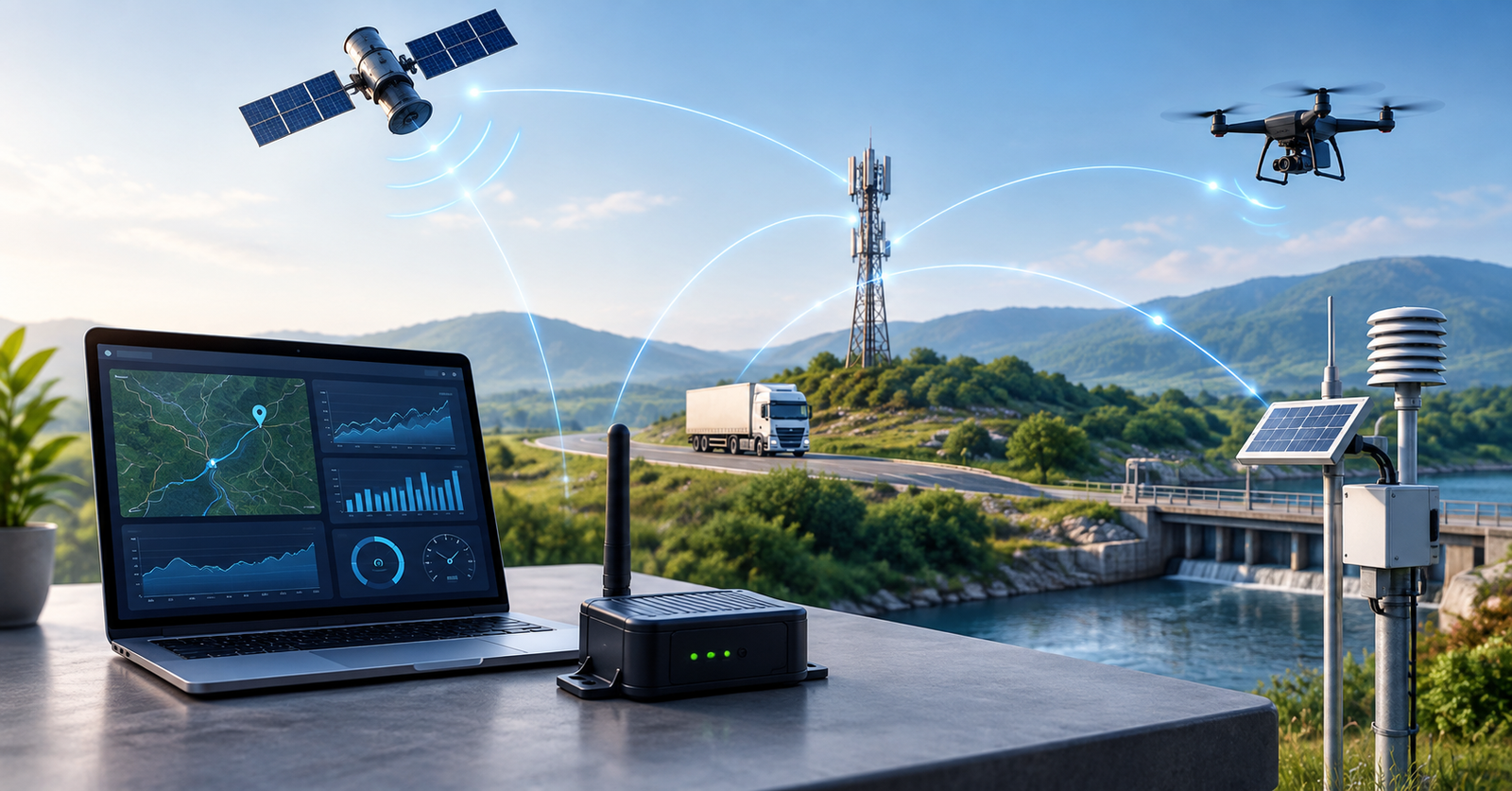
From connected vehicles reporting engine performance to servers alerting engineers about unusual activity, many modern systems continuously generate information about how they are operating. Telemetry technology makes it possible to collect that information remotely and turn it into useful data.
But what is telemetry tech, exactly?
Telemetry tech is the technology used to automatically measure, collect, transmit, and analyze data from remote devices, equipment, software, or environments.It allows organizations to understand what is happening without requiring someone to physically inspect the system every time information is needed.
Telemetry is widely used in information technology, healthcare, transportation, aerospace, manufacturing, energy, telecommunications, agriculture, and Internet of Things (IoT) applications.
This guide explains how telemetry technology works, its main components, common applications, key features, benefits, limitations, and how it differs from related technologies.
Table of Contents
- What Is Telemetry Tech?
- What Does Telemetry Mean?
- How Does Telemetry Technology Work?
- Key Components of a Telemetry System
- Types of Telemetry Technology
- Key Features of Telemetry Tech
- Common Uses and Applications
- Benefits of Telemetry Technology
- Pros and Cons
- Telemetry vs. Monitoring
- Telemetry vs. IoT
- Security and Privacy Considerations
- The Future of Telemetry Technology
- Frequently Asked Questions
- Key Takeaways
- Conclusion
What Is Telemetry Tech?
Telemetry tech refers to the hardware, software, communication networks, and analytical systems used to remotely collect measurements and transmit them to another location for monitoring, storage, or analysis.
A telemetry system might track temperature inside industrial machinery, CPU usage on a cloud server, battery performance in an electric vehicle, or environmental conditions at a remote weather station.
Although the applications differ, the basic principle remains similar: measure something, transmit the resulting data, and use that information to understand the condition or performance of a system.
Modern telemetry can operate almost continuously. Instead of waiting for periodic manual inspections, organizations can receive frequent or real-time information about equipment, applications, networks, vehicles, and infrastructure.
What Does Telemetry Mean?
The term telemetry combines concepts associated with remote measurement. In practical terms, it describes the process of measuring something at one location and communicating the measurements elsewhere.
Historically, telemetry became especially important in fields where direct observation was difficult or impossible, including aviation, meteorology, aerospace, and remote industrial operations.
Today, the concept has expanded significantly. Telemetry data can come from physical sensors as well as software applications, operating systems, networks, cloud infrastructure, connected devices, and digital services.
How Does Telemetry Technology Work?
Most telemetry systems follow a basic sequence:
Data source → Measurement → Processing → Transmission → Collection → Analysis → Action
The exact architecture depends on the application, but several stages are common.
1. Data Is Generated or Measured
The process begins with a source of information.
In a physical system, sensors may measure temperature, pressure, vibration, voltage, speed, humidity, location, or other variables.
In software environments, telemetry can include application errors, response times, memory consumption, network activity, user interactions, request rates, and system performance metrics.
2. The Information Is Converted Into Data
The raw measurement needs to be represented digitally so that another system can process it.
A sensor, embedded controller, application, or monitoring agent may perform this function. Depending on the system, the information may also be filtered, compressed, timestamped, categorized, or temporarily stored.
3. Telemetry Data Is Transmitted
The collected information is then sent through an appropriate communication channel.
Depending on the environment, telemetry transmission may use technologies such as cellular networks, Wi-Fi, Ethernet, Bluetooth, satellite communication, radio links, or specialized low-power wireless networks.
Software telemetry can also be transmitted through internet-based network protocols and application programming interfaces.
4. A Central System Receives the Data
A receiving platform collects incoming telemetry information.
This might be a local control system, data center, cloud platform, observability solution, fleet management platform, industrial control environment, or another specialized monitoring system.
The platform can organize and store the information for immediate or future use.
5. The Data Is Analyzed
Raw telemetry becomes more valuable when it is interpreted.
Software can compare measurements against normal operating ranges, calculate trends, identify anomalies, generate visualizations, and correlate different data points.
For example, rising temperature combined with increasing vibration could indicate that industrial equipment requires attention.
6. The System or Operator Responds
Telemetry can support both human and automated responses.
An operator might receive an alert and inspect a machine, while an automated system could adjust operating parameters when predefined conditions are detected.
This feedback capability is one reason telemetry is increasingly important in connected and automated environments.
Key Components of a Telemetry System
Although implementations vary considerably, a typical telemetry system contains several important components.
Sensors and Data Sources
Sensors measure physical conditions such as temperature, pressure, motion, vibration, voltage, and location.
In digital environments, applications, servers, network devices, and software agents act as data sources.
Data Acquisition System
A data acquisition system collects measurements from one or more sources. It may convert analog signals into digital values and perform preliminary processing before transmission.
Processing Unit
Embedded processors, controllers, gateways, or software agents can prepare information for transmission.
Processing may include filtering unnecessary data, applying timestamps, aggregating measurements, or identifying important events.
Communication Network
The communication layer carries telemetry information from the source to its destination.
The ideal network depends on factors such as distance, bandwidth, power consumption, latency, reliability, security, and operating environment.
Telemetry Platform
The receiving platform collects, processes, and often stores incoming information.
Modern platforms frequently provide dashboards, alerts, reporting tools, visualization, historical analysis, and integrations with other systems.
Analytics and Alerting
Analytics tools turn large volumes of telemetry into actionable information.
Rules can also trigger alerts when measurements exceed predefined thresholds or when abnormal patterns are detected.
Types of Telemetry Technology
Telemetry is not a single technology. Different industries use specialized telemetry systems based on what they need to measure and how quickly the information must be transmitted.
IT and Software Telemetry
Software telemetry records information about applications and computing infrastructure.
Typical data includes:
- Application response times
- Error rates
- CPU and memory utilization
- Network performance
- Request volume
- Service availability
- Application events
- System logs and traces
This information is important for application performance monitoring and system observability.
Network Telemetry
Network telemetry provides information about traffic, devices, connections, packet behavior, bandwidth utilization, and network health.
IT teams use this data to investigate performance problems, identify bottlenecks, plan capacity, and detect unusual network behavior.
Industrial Telemetry
Factories, utilities, processing facilities, and industrial sites use telemetry to monitor equipment and operating conditions.
Machines can report temperature, vibration, pressure, energy consumption, operating hours, and other measurements that help maintenance teams understand equipment health.
Vehicle and Fleet Telemetry
Modern vehicles can generate substantial amounts of operational data.
Vehicle telemetry may include speed, location, fuel consumption, battery condition, engine parameters, mileage, braking behavior, and diagnostic information.
Fleet operators can use this information to improve routing, maintenance planning, fuel efficiency, and vehicle utilization.
Medical Telemetry
Healthcare telemetry enables certain patient measurements to be monitored electronically, sometimes from a distance.
Depending on the clinical system, telemetry may be used for information such as heart rhythm and other physiological measurements. Medical telemetry requires appropriate clinical oversight, security, reliability, and regulatory compliance.
Aerospace Telemetry
Aircraft, satellites, rockets, and spacecraft use telemetry to communicate operational information to ground systems.
Engineers may monitor parameters including temperature, velocity, pressure, electrical conditions, position, and subsystem status.
Because engineers cannot physically access many aerospace systems while they are operating, telemetry is particularly important for understanding their condition.
Environmental Telemetry
Remote monitoring stations can collect environmental measurements including rainfall, temperature, air quality, water levels, humidity, wind conditions, and soil characteristics.
This makes telemetry valuable for meteorology, environmental research, agriculture, flood monitoring, and natural-resource management.
Key Features of Telemetry Tech
Several characteristics make modern telemetry systems particularly useful.
Remote Data Collection
Telemetry reduces the need to physically visit equipment or locations simply to obtain routine measurements.
This is especially valuable for geographically dispersed, hazardous, inaccessible, or continuously operating systems.
Real-Time or Near-Real-Time Monitoring
Many systems can transmit information frequently enough to provide an up-to-date view of current conditions.
However, not all telemetry is truly real-time. Transmission frequency depends on the system design, connectivity, power availability, bandwidth, and application requirements.
Automated Measurement
Once configured, telemetry systems can collect information automatically.
Automation can improve measurement consistency and enable monitoring at a scale that would be difficult to achieve manually.
Alerts and Notifications
Telemetry platforms can generate alerts when specified conditions occur.
For example, an alert could be triggered when server CPU utilization becomes unusually high or when equipment temperature exceeds an established operating threshold.
Historical Data
Stored telemetry creates a historical record of system behavior.
Organizations can examine this information to identify trends, compare performance over time, investigate incidents, and improve forecasting.
Integration
Telemetry platforms can often exchange information with analytics systems, business applications, maintenance platforms, dashboards, and automation tools.
Integration allows telemetry data to become part of broader operational workflows.
Scalability
Well-designed systems can collect information from large numbers of devices, sensors, applications, or machines.
Scalability becomes particularly important for IoT deployments, cloud infrastructure, telecommunications networks, and large industrial environments.
Common Uses of Telemetry Technology
Telemetry technology supports a wide variety of practical applications.
Predictive and Condition-Based Maintenance
Equipment telemetry can reveal changes in vibration, temperature, pressure, energy consumption, or other operating characteristics.
Maintenance teams can use these trends to identify equipment that may require inspection or servicing before a more serious failure occurs.
Telemetry itself does not automatically predict every failure. Its value depends on measurement quality, analysis methods, equipment knowledge, and appropriate maintenance processes.
IT Performance Monitoring
Technology teams use telemetry to understand whether applications, servers, networks, databases, and cloud services are functioning correctly.
Performance measurements can help engineers identify slow services, resource constraints, errors, and availability problems.
Fleet Management
Transportation businesses can use vehicle telemetry to understand vehicle location, mileage, fuel use, engine status, and driving patterns.
Combined with appropriate fleet-management processes, this information can support route optimization and maintenance scheduling.
Energy Management
Smart meters, renewable-energy installations, utility infrastructure, and industrial facilities can use telemetry to track generation, consumption, voltage, equipment condition, and other operational measurements.
This information can help operators understand demand and system performance.
Agriculture
Telemetry systems are increasingly used in precision agriculture.
Connected sensors can measure soil moisture, weather conditions, equipment operation, irrigation status, and other variables. Farmers can use these measurements to make more informed operational decisions.
Healthcare Monitoring
Medical telemetry can provide healthcare professionals with ongoing physiological information where clinically appropriate.
Its use ranges from hospital monitoring environments to certain forms of remote patient monitoring, depending on the device, clinical context, and applicable regulations.
Research and Scientific Monitoring
Scientists often need information from places that are difficult to observe continuously.
Telemetry allows research equipment to report data from remote environmental stations, oceans, wildlife-tracking systems, atmospheric instruments, and other research environments.
Benefits of Telemetry Technology
Better Operational Visibility
One of the biggest advantages of telemetry is visibility.
Instead of relying entirely on occasional inspections or user reports, operators can access measurements that show how a system is actually performing.
Faster Problem Detection
Frequent monitoring can reveal unusual conditions sooner than periodic manual checks.
Earlier detection may give teams more time to investigate and respond before a problem becomes more disruptive.
Reduced Manual Monitoring
Automated telemetry reduces the amount of routine data collection employees need to perform manually.
Workers can therefore spend more time interpreting information and solving problems rather than repeatedly recording basic measurements.
Improved Maintenance Decisions
Historical telemetry can show how equipment behaves over time.
Maintenance teams can use these trends alongside inspections and engineering knowledge to make more informed maintenance decisions.
Data-Driven Decision-Making
Telemetry replaces some assumptions with measurable evidence.
Organizations can use operational data to evaluate performance, understand resource consumption, investigate failures, and prioritize improvements.
Improved Safety
Telemetry can reduce the need for personnel to enter hazardous or inaccessible environments solely to obtain measurements.
It can also provide earlier warnings when monitored conditions move outside acceptable limits.
Greater Efficiency
When combined with good analytics and operational processes, telemetry can help organizations identify wasted resources, inefficient equipment, unnecessary downtime, and performance bottlenecks.
Pros and Cons of Telemetry Tech
| Pros | Cons |
| Enables remote monitoring | Can require significant initial investment |
| Supports frequent or real-time data collection | Generates large volumes of data |
| Helps detect abnormal conditions | Depends on reliable sensors and connectivity |
| Reduces repetitive manual measurements | Can create cybersecurity risks |
| Provides historical performance information | Poor-quality data can produce misleading conclusions |
| Supports automation and analytics | Requires ongoing maintenance and management |
| Can improve operational visibility | Privacy concerns may arise with personal or behavioral data |
| Scales across many connected systems | Integration can become technically complex |
The value of telemetry depends heavily on implementation. Collecting large quantities of data provides little benefit if the organization cannot ensure its quality, security, context, and practical use.
Telemetry vs. Monitoring: What Is the Difference?
Telemetry and monitoring are closely related, but they are not identical.
Telemetry is primarily concerned with generating, collecting, and transmitting measurements. Monitoring uses those measurements to observe the condition or performance of a system.
For example, a server might transmit CPU utilization every few seconds. That process is telemetry. A dashboard that displays CPU utilization and alerts an administrator when it becomes unusually high is part of monitoring.
In practice, modern platforms frequently combine both capabilities.
Telemetry vs. IoT: Are They the Same?
Telemetry and the Internet of Things overlap significantly, but the terms should not be used interchangeably.
Telemetry describes remote measurement and transmission of data.
IoT generally describes networks of connected physical objects that use sensors, software, communications, and computing capabilities to exchange data and sometimes perform actions.
Telemetry is therefore a core capability within many IoT systems. However, telemetry existed long before modern IoT technology.
A satellite transmitting temperature information to Earth is using telemetry, for example, even though the concept does not depend on today’s consumer-oriented definition of IoT.
Telemetry Data and Observability
Telemetry has also become an important concept in modern software observability.
Observability aims to help engineers understand the internal state and behavior of complex systems by examining information generated by those systems.
Three commonly discussed forms of software telemetry are:
Metrics
Metrics are numerical measurements collected over time, such as CPU utilization, request rate, memory consumption, or response latency.
Logs
Logs are timestamped records of events produced by applications, operating systems, infrastructure, and other components.
Traces
Distributed traces help engineers understand how individual requests move through multiple components or services.
Together, these forms of telemetry can provide engineers with a much more detailed picture of application and infrastructure behavior.
Security and Privacy Considerations
Telemetry systems can provide valuable operational information, but they also introduce security and privacy responsibilities.
Data in Transit
Telemetry information can travel across wireless networks, the public internet, or private infrastructure.
Appropriate encryption and secure communication protocols can help protect information against interception or manipulation.
Authentication and Access Control
Organizations should control which devices can submit telemetry and which users or systems can access the collected information.
Weak authentication can create opportunities for unauthorized access or falsified data.
Data Minimization
Not every available measurement needs to be collected.
Organizations should consider whether each data point has a legitimate operational purpose, particularly when telemetry could contain information related to individual users, locations, or behavior.
Storage Security
Telemetry databases may contain commercially sensitive, operational, or personal information.
Access controls, retention policies, backups, encryption, monitoring, and other appropriate safeguards should therefore form part of the overall architecture.
Device Security
Connected sensors and telemetry gateways can themselves become attack surfaces.
Secure configuration, firmware management, updates, credential protection, and network segmentation can reduce unnecessary exposure.
Challenges of Implementing Telemetry Technology
The ability to collect data does not automatically make a telemetry project successful.
Data Overload
A large deployment can generate enormous quantities of information.
Organizations need to decide what should be collected, how frequently measurements are required, how long information should be retained, and which events deserve immediate attention.
Connectivity Problems
Remote systems may operate in environments with unreliable or limited communications.
Some telemetry solutions therefore need local buffering or edge processing so information is not immediately lost when connectivity disappears.
Sensor Accuracy
Decisions are only as reliable as the underlying measurements.
Sensors can drift, fail, become incorrectly calibrated, or provide misleading readings under certain environmental conditions.
Integration Complexity
Older equipment and software may use different interfaces, formats, and communication protocols.
Combining these systems into a unified telemetry environment can require gateways, adapters, APIs, or customized integration.
Alert Fatigue
Generating too many low-value alerts can make important warnings easier to miss.
Effective telemetry programs therefore require sensible thresholds, prioritization, and continuous refinement of alerting rules.
The Future of Telemetry Technology
Telemetry is becoming increasingly important as more physical and digital systems become connected.
Edge computing is one important development. Rather than transmitting every raw measurement to a centralized platform, devices and gateways can process some information locally and transmit only relevant results or events.
Artificial intelligence and machine learning can also be applied to telemetry datasets to detect unusual patterns, classify behavior, and support forecasting. However, the effectiveness of these techniques depends heavily on data quality, appropriate models, and the context in which results are used.
Another major trend is the growing importance of interoperability. Organizations increasingly need telemetry from different vendors, devices, applications, and infrastructure components to work together.
As automation expands across transportation, manufacturing, energy, IT, healthcare, and smart infrastructure, reliable telemetry will remain a fundamental source of operational information.
Frequently Asked Questions
1. What is telemetry tech in simple terms?
Telemetry tech is technology that automatically collects measurements from a device, system, or location and sends that information somewhere else for monitoring or analysis.
A simple example is a remote temperature sensor sending regular readings to an online dashboard.
2. What is an example of telemetry?
A connected vehicle transmitting information about its location, battery condition, speed, and engine performance to a fleet management platform is an example of telemetry.
Other examples include weather stations reporting environmental conditions and servers transmitting application-performance metrics.
3. What data does telemetry collect?
The answer depends on the system.
Telemetry can collect temperature, pressure, speed, location, vibration, voltage, network traffic, CPU utilization, memory usage, application errors, response times, equipment status, and many other measurements.
4. Is telemetry the same as tracking?
Not necessarily.
Tracking typically focuses on determining the location, movement, status, or activity of something. Telemetry is broader and can include almost any remotely transmitted measurement.
GPS location data can therefore be one form of telemetry, but telemetry does not always involve location tracking.
5. Does telemetry require the internet?
No.
Telemetry requires some method of communication, but that method does not necessarily have to be the public internet. Systems can use private networks, radio, cellular connections, satellite links, local wireless networks, wired infrastructure, and other communication technologies.
6. Is telemetry used in cybersecurity?
Yes. Security teams can analyze telemetry from endpoints, applications, networks, identity systems, and infrastructure to identify suspicious behavior and investigate incidents.
However, telemetry is only one part of a broader cybersecurity program.
7. Is telemetry safe?
Telemetry can be implemented securely, but its safety depends on system design and management.
Encryption, authentication, access control, secure device configuration, data minimization, software updates, and sensible retention policies are among the measures that can reduce security and privacy risks.
8. Why is telemetry important?
Telemetry provides visibility into systems that may be remote, complex, distributed, or difficult to inspect continuously.
That visibility can support faster troubleshooting, better maintenance, improved operational decisions, automation, safety, and performance optimization.
Key Takeaways
- Telemetry tech automatically measures, collects, and transmits data from remote physical or digital systems.
- A typical telemetry process involves data collection, processing, transmission, storage, analysis, and response.
- Telemetry is used in IT, transportation, manufacturing, healthcare, aerospace, energy, agriculture, environmental monitoring, and many other fields.
- Common telemetry data includes temperature, vibration, location, speed, voltage, system performance, application errors, and network activity.
- Telemetry supports remote monitoring, faster problem detection, historical analysis, automation, and data-driven decision-making.
- Telemetry and IoT are related but not identical; telemetry is a fundamental capability used by many IoT systems.
- Security, privacy, data quality, connectivity, and alert management are important considerations when implementing telemetry.
- The usefulness of telemetry depends not on how much data is collected, but on whether the right data can be transformed into reliable and actionable information.
Conclusion
Telemetry tech is one of the underlying technologies that makes modern connected systems possible. By automatically collecting measurements and transmitting them for analysis, telemetry gives organizations visibility into equipment, software, vehicles, infrastructure, environments, and other systems without requiring constant physical inspection.
Its applications range from monitoring cloud servers and industrial machinery to managing vehicle fleets, observing environmental conditions, and receiving data from spacecraft.
The biggest advantage of telemetry is not simply its ability to generate more data. Its real value comes from providing the right information at the right time, allowing people and automated systems to detect problems, understand performance, make informed decisions, and respond more effectively.
As IoT, edge computing, automation, cloud infrastructure, and intelligent analytics continue to evolve, telemetry technology will remain a critical bridge between what is happening inside a system and the people or software responsible for understanding it.
I’ve structured the final version around the primary keyword “telemetry tech” while naturally incorporating related concepts such as telemetry technology, telemetry systems, telemetry data, remote monitoring, network telemetry, software telemetry, IoT, sensors, and observability. The paragraphs and headings have also been edited for readability, grammar, search intent, and minimal keyword repetition.